I just got back from a vacation. My first beach holiday in years. It was to honour my 50th birthday, not as a break from life. Yes, i wanted to slow down and relax, just not to escape my life. Vacations are not meant to to get a break from our everyday life, but to enhance it with a dose of pleasure and adventure. As a global citizen, this is also a privilege to experience other cultures and learn from their wisdom and experiences. The way I do them is to infuse intention, ritual, and soul tending in my time away. If we assume a vacation is going to cure burn-out, we will be grossly disappointed. This is especially true for a week away. If we view a holiday like a personal retreat, that may help. We do also need to integrate the time away into our life. Otherwise, the trip becomes redundant. It becomes a stand-alone event, forgotten quickly.
As a mother, a holiday is especially not a vacation from life. In many ways, it is more work, just different. Mental load, decision fatigue, and overwhelm with less resources play into what gets packed in our suitcase when we travel. Sure, we get a pause from work and that undivided attention to our family gets the front seat. It takes a lot of self-love and will power to also remember we are also on this vacation. Otherwise, we as moms continue to not be seen or heard.
 Speaking of which, mental load is not a task itself, but the ongoing running to-do list that never ends. So it’s not so simple just to give part of it to someone else. They also need to start to take on the load that is unseen. We need to move away from the internalized Super Mom part that weaponizes our competence at the same time as challenging our partner’s incompetence. It’s not that they can’t do the work; it’s that it is benefitting them to not have to do it, yet.
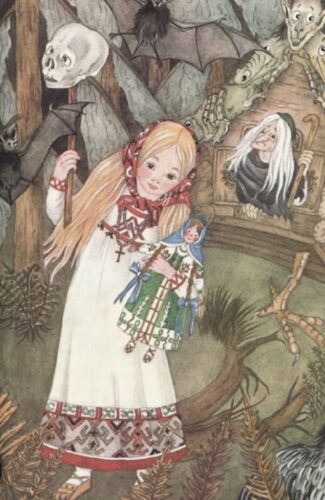
Do you know the story of Vasalisa and her doll? It’s part of the much larger tale of Vasilisa and Baba Yaga. One of the most powerful take-aways for me was that Vasalisa had what she needed all along. If you haven’t read the story yet, you might get some spoilers here so run to get your own copy of Women Who Run with the Wolves and then continue reading.
If you already know of the tale-as-old-as-time story, or don’t have time to read – because truly who does anymore, and that is part of my point with this exact article – continue reading and i’ll play the role of Vasalisa’s doll for you…
Vasilisa was a young girl whose mother died after a long illness. In the final days of her life, she made a small doll that was infused with magical qualities. Mainly they were acts of service that helped Vasalisa during times of struggle and initiation. These acts were what a mother does when her daughter needs support and guidance. It was the doll who helped her separate the poppy seeds from the dirt, who made a delicious stew and meticulously darned clothing, and who cleaned the messy home of Baba Yaga.
Some folks (including me) have interpreted this story as an archetypal mirror to having an Inner Mother or Self-Care Part who can step in when things are hard. The story is about trusting our intuition, our body’s wisdom, and the initiation of becoming an adult, AND ALSO a reminder that we are not meant to do it alone.
So, how does that relate to mom load?
Maybe you also heard Chappell Roan make a bold statement last year in an interview where she talks about her friends who are parents, and referenced them being in hell.
Guess what?
She’s right and what I also think she’s speaking about is that parenting is fucking hard. It’s especially hard these days, in ways that never existed before.
What makes it hard is not that something changed in our children.
It’s that we have lost our way to have a village of support. Who cares for the caregiver?
We get burnt out or overwhelmed and assume the mental load because so many of us want to show up differently (a.k.a. better than we received as children). This can lead to martyrdom. Our to-do list is so long it becomes a badge of honour in our toxic productivity oriented world, and yet it creates havoc on our nervous system. We experience an activated fight response to keep up with all the work, which ultimately impacts our capacity to be present, attuned, and connected to our children.
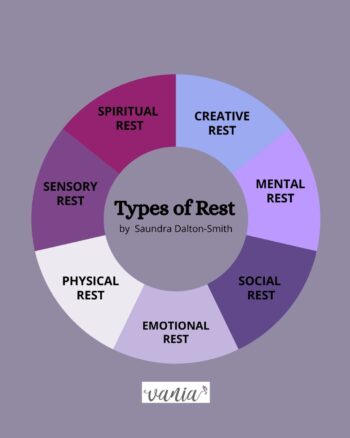
Dr. Saundra Dalton-Smith created a great model of 7 different types of Rest. I appreciate her perspective, as it helps us see what may be draining us, and what is the antidote. For instance, are you feeling over-stimulated? Maybe you need a sensory rest or social rest. Are you physically drained? A nap or early bedtime and NOT doing the dishes can be the perfect remedy. For me, it’s when i feel emotionally spent or mental tapped out that tells me what i need – a sacred bath ritual and time to myself.
I’m reading a hot new release called When Good Moms Feel Bad. It is a book that incorporates Internal Family Systems as a reference point for mothers. “The Inner Mother is your capacity for presence, wisdom, and care – qualities that emerge naturally when your parts relax and trust that you can handle what’s in front of you. This is the beautiful paradox of motherhood: in learning to care for someone else’s vulnerability, we develop exactly what we need to be with our own.” Jessica Tomich Sorci and Rebecca Gershan.
Having an Inner Mother is a visual reference of caring for ourselves as we care for others. It is not just practicing self-compassion, but the first preliminary step of tending to our basic human needs. Practising this attunement in our own internal landscape is a way of checking in with our Inner Baby (or child). All those things you’re already doing for your kids? They’re also just what you need. Whatever our children need, so do we. This is where our Mom Parts need to have a dialogue with our Inner Mother – The Parts have competing agendas. “The parts of you who work so hard to make you a good mom are the ones that are the meanest to you. Good Mom parts can tip you out of balance and into burnout.” (When Good Moms Feel Bad) Our Mom Parts want to care for our actual child AND our Inner Mother is the one tending to the child you were once upon a time. This can create an internal conflict when the Parts are polarized.
In Internal Family Systems, the model’s aim is to help us access ‘Self’ energy – the most evolved and integrated version of you. And yet, self-care continues to have a bad connotation. Unlike other self words like love, compassion, worth, and esteem, care assumes we are selfish. We are in fact, self-preserving (a hat tip to Audre Lorde). We need to reframe the concept of self-care as the care we give ourselves is aligned with our fullest expression. It needs to reflect who we truly are and not just the parts of us who give ourselves care like a checklist or a to-do list. The rest we give ourselves needs to be rejuvenating and replenishing our energy. It includes pausing by doing nothing AND also creates nourishment in doing so. Otherwise, what we claim to be rest is performative unless it also is nourishing.
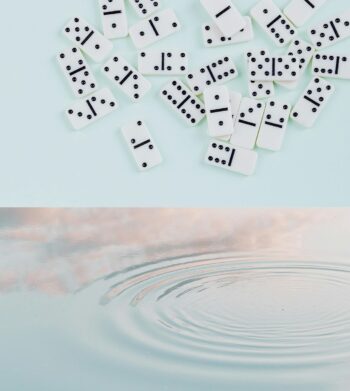
The word “self” in this term does not apply alone or only to ourselves. We are not meant to do the work alone. Otherwise, we are left always cleaning up the dominos that fall, being a martyr who people pleases our children, to avoid conflict and also because our own Inner Child is leading the decision. Instead, let us model what asking for our needs look like. We all benefit when we take care of ourselves and it has a ripple effect.
One great way to start to offset the overwhelm and exhaustion is to reclaim micro-moments of rest for yourself. Think of them as “reparenting” opportunities. These are mindful, intentional pauses that help you come back to the present moment. This is especially true when we go on vacation, and is a requirement of everyday life.
This means when we feed our kiddo, are we also checking in to see if we’re hungry? When you’re making your kids a snack, what if you made enough of it so you too could nourish yourself? And, when you ask your kids to come and sit down to eat it, you took your own advice and put your feet up? Or, the next time you wash your kid’s hands after school, take a moment to wash your face and slow down to apply some lotion on your hands and face. Breathe in the delicious smell of this lotion.
So often, women tell me that they make just enough smoothie or kale chips, breakfast or snacks for their kids to eat, but don’t consider their own basic needs. I am not exempt from this – i put out my kids’ vitamins while they eat their breakfast and totally forget my own supplements. They are RIGHT THERE besides my kids’, for goodness sake! Burnout manifests when we set impossible goals AND have internalized the belief that we are meant to tackle the load on our own. Being busy is not the same as being productive. Busy is a reaction to the tasks you have to accomplish whereas productivity is PRO-active and has a larger goal and purpose.
My kids are teens now and travelling with them looks different than it did when the were young. I may not be as touched out as i once was. Mainly because my kids are taller than me now – i have not held their hand in years. I still make sure they are close by when in crowds and ensuring the necessities are packed – like toothpaste, swim goggles, and phone cords. That mental load is a checklist i start writing down weeks before the trip. And while it falls on me now, it is a task i take to heart and is part of my mothering job description. My partner balances it with his own list and load – car rentals, mapping our journey, and learning about the history of the places we go to.
We might be touched out by all the work of motherhood. Maybe the burn-out we are feeling is in fact overwhelm due to our flawed society that still wants us to believe we are naturally meant to be caregivers first and foremost. The mental load we are carrying is not meant to be ours alone to hold. What we call our fault or guilt is our overculture’s false narrative pushing down on us to keep us too tired to make change. To keep us too busy to notice the system is flawed. We are not a failure – the patriarchal, white supremist system is flawed and failing US.
One of my favourite podcasts, Moonbeaming, had Amelia Nagoski on it to discuss burn-out from a feminist lens. It was great, and also used a magnifying glass to look at the burnout mothers experience. It’s worth a listen but here is a great quote that really landed for me: “Nothing is going to happen until more help is given.” Here, Amelia is referring to the need to ask for and receive said help, to not continue identifying with the primary lead parent / default parent tension.
We need to remember that postpartum resilience isn’t something that just happens magically in our DNA. We need to build the structures in place so we feel more supported. It’s not just babies that need to be cared for when they become, it’s also new parents.
Rest is whatever refuels us. Taking time to rest is what helps us attune back to ourselves and rebuild our connection to our own Self. When this gets to happen, we can re-orient back to our Inner Mother and the intentions we have as a parent. This is why it helps to carry our own Vasalisa in a pouch wherever we go, as a guide for the initiation that is motherhood. You can think of this as a reparenting reparative experience: We need to do the work to heal. Some things to pack that can help this messy transition into parenthood are:
🌀Having even one or two folks who are further along in their parenting journey as mentors or guides
🌀Reading the plethora of books that exist now more than ever before (but this also adds to mental load)
🌀Getting to visit with the other parts of us that are not connected to our mother role – this includes time to rest, play and be our fullest self when on vacation.
🌀Joining a group and being part of a village of supporting each other and being witnessed in this transition
🌀Ask for help – seriously do it, just call Vasalisa’s name
🌀This “hell” has a name – uninitiated parenthood – so learning about matrescence can lessen this feeling when reclaim it as a sacrifice and rite of passage
The hell is what you make it and it doesn’t have to be this hard.
Asking for help is a key part of meeting our needs as well as modelling that doing so is a sign of strength and part of being a human. We may not get our needs met or the request may not be fulfilled, and yet it’s worth speaking up for ourselves. Why? Well, because a take-away we experience is the truth that we matter enough to ask for help or support even if it can’t be given. This heals the wounded parts of us that remain present in our inner system. They get the gift of an unburdening and evolve into a more helpful agenda. It also helps us not hold resentment towards our own children for the freedom they have that we didn’t receive. We oscillate between anger towards our children and people-pleasing them, as ways to not repeat what was hard for us as children. Neither of these tensions heal our parts. Mainly because they have agendas that are polarized – one is advocating for our own needs alone and the other prioritizes our children because we are afraid they will also feel unloved otherwise.
Remember what i mentioned above, about our “parts?” Our real-life children are not here to heal our unmet needs from our childhood, so cannot heal attachment wounds. It is our responsibility to ensure that the children are taken care of and that’s what we also need to learn how to care for our Self – to soothe her so that we don’t repeat what we inherited.
A tremendous amount of healing comes from loving ourselves through motherhood, and then witnessing the gift of our healing as it is shared with our children.
And, in case you don’t believe that we model what we need with our children, here’s a funny story that may help. My daughter had a dance recital and when the teacher asked the students what something they need to do this weekend, after the answer is, I’ll take a bath or have a nap my daughter said “ask your parents if they need help.” Not only was I beaming with pride and excited that she knew that and said that answer, I was also proud that my kid was the one that reminded everyone that we all need help, and our kids are members of our home environment. For the record, we are not asking them to take over the adult jobs, but to contribute and to learn how to care for things so that they will know how to do it one day. They also need to know that we are also not superhuman.
Witnessing my daughter say this helps me trust that my kids know me and what I need, at least in theory. So when i heard her say it, i exclaimed with joy “that’s my kid!” She came up to me after and told me how much her friends loved my excitement and called me an icon. That is a win!
So, the next time you travel, feel overwhelmed, and need to rest, make sure you remember to ask Vasilisa for help! You are never alone.