
These past couple of years, i’ve been diving deeper in the parts of me that make me whole. It’s been a very intentional journey of getting to know what is important to me, and what has been missing. As i have found a way to integrate the mother role into the rest of me, i have now put all the other pieces back together. This is how matrescence is a journey of re-entry. The metamorphosis of who i have become is based on what i have been already, and than a new version of me arises.
I’m a big fan of the Wheel of Life resource. It is typically used by life coaches to help people make goals for their life, and to see where it is imbalanced. A few years ago, i did this exercise for myself. I use it further as a feminist therapy tool to see where the burn-out may be happening, and if there are parts of our life that we are living for external reasons or expectations.
I also like this way of looking at 6 parts of our Self – Physical, Emotional, Spiritual, Social, Intellectual, and Environmental. It was through this process that i started to see that my Sexual Self was not listed as its own (and well deserving) category. Is it physical, emotional, social or dare i say, spiritual?
I realized it’s important to add a couple of parts of self to this configuration. For me that includes my sexual self, my inner child, and my inner goddess. It also includes my healer, wise woman and warrior. While these may be more archetypes that make me whole, i value them as the parts of me that are steeped in my values, dreams and full essence.
It can’t be an oversight that these various self-help tools and resources don’t intentionally include a category for Sexuality. It’s typically assumed in the relationship category. So what happens if there is no other person to be intimate with? Really, i think we can look back over the centuries and see how our sexuality was always pushed to the shadows. This is especially true for women and mothers even more so. Back in the days of yore, religion and white colonialism ruled over all other parts. Since i’m not a historian, i’m going to skip ahead to how this impacts us now – our spiritual selves are still what is pure and right, and our sexual self is dirty and unholy.
This is where the dichotomy of mother/whore comes in – virginal maiden and mother are seen as wholesome, safe and acceptable. Whore and crone are pushed to the shadows. One is too sexual and the other is seen as unworthy. Yet we need them all in order to live a full life.
Gender roles and sexuality was put into binary lines. Anything that was deemed women’s work was soft, gentle, nurturing, and in the home. A major part of women’s role was to bear children and raise them. It was then that sexual acts were deemed valuable only for reproductive rights, and not for pleasure or connection between the partners.
Research is now showing us now that our brain’s nervous system is designed to include a social engagement system for attachment, connection and safety. While we have made so many gains to reclaim sexuality for pleasure and joy, as well as for connection, there is still so much more collective healing we need to go through. First, i think it helps to look at the benefits of feminine sexuality and energy.
The benefits of reclaiming our sexual self? What’s that, you wonder? For me it’s access to pleasure, attunement to self, and seeing it is a superpower for energy and a life force in and of itself. And yet, reclaiming sexuality takes time, steps and a commitment to do the messy work of unpacking age-old embedded stories. It also takes resilience to do something defiant and subversive.
Most of us have been taught about sex in school, and a very basic overview by our parents, if we were lucky. One way to heal and integrate this part of our Self is to heal our family of origin’s repressed view of sexuality. As women, we are socialized to be modest. So instead, let’s reckon with our desires, body image, internalized shame; this is built from a false idea that our sensuality belongs in our shadow.
Part One: Reclaiming My Sexual Self
Before we can integrate our sexuality into our motherhood, we need to reclaim it in our womanness. Here are some ways i have found this reckoning, and this reclamation of my divine sexuality. It is our birthright after all. As you choose to journey to rediscover yours, think of what your sexual story is. What is the word that honours it? Be mindful that you will need to push past the discomfort to get to a better end. The history of your sexual self is important to acknowledge, as is the future of your reclaimed pleasure.
1) Know your Body and Nervous System
We have been taught only part of the story regarding female arousal, desire, and our reproductive system. It was only when i was trying to get pregnant for the first time that i truly learned more about my anatomy and how it all works. When we know our Nervous System response, we then don’t replay the stuck circuit.
Fo instance, it takes 30 minutes to get blood to engorge the vulva. We are not fully aroused during foreplay, and we can arouse over the course of a day, just by thinking or fantasizing. This helps us get to arousal so it’s important to know what turns you on. And yet most heteronormative monogamist couples centre the man’s orgasm as evidence of successful sex.
Foreplay isn’t just the step-by-step guide that happens moments before sex. It is also the acts of attention and care in the day. It really is the emotional and mental offerings that give us self-permission to relax in pleasure. Women today more than ever are taught to only do self-care acts after getting all the to-do items done. We literally can’t relax if the kitchen is a mess, or the bedroom is not conducive as a boudoir. And if you are a parent, well… Anyone who has been a mother to young children knows the feeling of being touched out. Even if the rational part of the brain can see that partner touch is different than a child’s need, it is hard to disentangle the exhaustion on our body.
For those of us that experienced sexual assault, whatever that looked like, it can be hard to feel safe when aroused. So it’s crucial to find ways to reclaim that felt sense of safety. Learn how the nervous system kicks in with a fight/flight/fawn/freeze response. Learn where the trauma is stored in your body. Find ways to tend to the emotional, physical spiritual parts of you. One way to do so is to remind your brain that you survived: “That was then, this is now”. And this healing takes time.
Self-pleasure is a wonderful way to reconnect with your body, to learn how to attune what you like. Learn more about vagina mapping, sensate focus exercise and mindfulness to get some hands-on awareness. This will help get to a deeper sense of safety. Breath work is also a major component of access pleasure and presence in the sexual realm. Practice vulva breathing by placing your hand on your vulva and simply breathing mindfully. Have a yoni steam – controversial i know, and yet it can be just what you vag has always wanted. Give it the same care and attention you give your face, teeth or hair. Oxytocin, or the love hormone, can work wonders to help access pleasure and desire.
2) Consent Consent Consent!
Learn more about the dance between consent and approval. Betty Martin has a great resource called the Wheel of Consent. In her new book, she dives deep in explaining how to practice giving and receiving pleasure, and sees how consent ins pivotal in both receiving pleasure and giving it.
Planning a date night ahead of time, even when you don’t leave your home, also helps with informed consent. The date is agreed upon, and it can be helpful to explicitly put sex on the table (literally or not, wink!). It is also a chance to track how you feel about the upcoming date, and to plan accordingly.
There are 6 Pillars to Sexual Health and consent is the #1 pillar, for good reason. That’s why it’s so important for couples (whoever and how many they are) to explicitly discuss their needs, desires, worries, and fears. We also need to bear witness to past experiences of sexual behaviour, especially of one partner has a history of sexual violence. As we know that 1 in 4 women (cis, trans or non-binary folx) experience sexual assault in their lifetime, it is crucial to learn how to be a trauma-informed partner.
3) Core Erotic Theme
Once we have a felt sense of knowing what our body feels when safe, we have more capacity to tend to the desire that lives there. Female desire has been stigmatized in such a way that it is hard at times to honour the eroticism that hides even further in the shadows. So, it’s time to bring your sexy self out of the shadows. Spend some time thinking back to old fantasies. Maybe you have favourite not-to-be-talked-about scenes from books or movies. Maybe there is an old scene that you have always wanted to create. Spend some time with a journal and pen, putting these themes to paper. What might be the core fantasy theme. What is sexy to you? Is it that you want to dress sexy? Maybe it’s that you want to be kissed all over, and have your toes sucked. Or having sex in a shower turns you on. Once you have your core theme, then see how you can ask yourself to start putting it into practice. If you’re not partnered, don’t worry – you can still get your sexy on! If you want to know more about finding your core fantasy, adrienne maree brown speaks about it in her book Pleasure Activism or this article here.
Maybe for you, nature is sexy. Nature’s elemental life force definitely is sexy and invigorating. How can you bring more nature into your theme? How about setting up your space for fresh greenery, candles, or a photo of your favourite place.
If finding a core theme is tricky, how about doing an experiment to find what your sexy is? Can you let down your guard a bit? Try being vulnerable – there is courage there! And, definitely try to turn off the inner judgment, move into it, and move through feelings to get them out.
Activate your senses by taking some time this week to put on sexy:
*Sight: Clothes, makeup, visualization, show to watch
*Sound: music, listen to a story, read erotica
*Smells: Lotion, candles, incense
*Touch: texture, skin, massage, water
*Taste: what spices, foods, or treats stimulate your desire
“The way to maintain one’s connection to the wild is to ask yourself what it is that you want. This is the sorting of the seed from the dirt.” —Clarissa Pinkola Estes
4) Daily Pleasure Acts
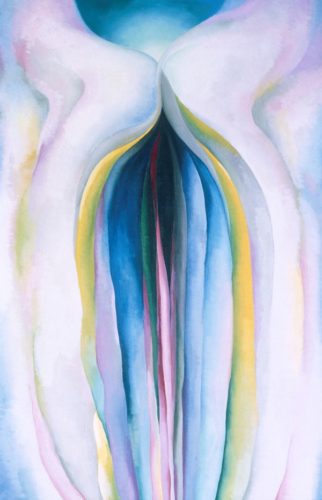 It is hard to know what brings us pleasure with lovers when this feels foreign in our own body or daily life. Pleasure shouldn’t just be about sexual or erotic practices, but daily ways to feel joy in our body. For me, dance, the sense of smell, and being creative with paints and clay are ways i access pleasure. Maybe you can channel Georgia O’Keefe, and paint some erotic flower scenes. Just take a look, a real look, at the painting in this article!
Have a pleasure practice – be it meditation, stroking your body, lotion, masturbation, yin yoga practise, connecting with senses, flower bouquets, anchor smells, being present, candle in the bath. What can you do to make the thing you are doing 5% more enjoyable? Ann Nguyen created this concept of making an event or activity 5 % more pleasurable. This helps to build capacity to enjoy the day more. This increases pleasure IN the bedroom as well.
I also love the idea of working on ways to surrender. I don’t mean to give up, or to be passive, but rather to build up the pleasure muscle: we need to do it mindfully and with exquisite risk. Think of the words of pleasure, alive, vibrant, abundance or ecstasy. These words may be challenging for you. How about Primal – do you need to go to this deeper place, can you dive in? Or how about dipping your toes in that? Our depth of eroticism is tied to self-expression, as well as that energy and full essence i alluded to earlier.
Part Two: The Sexual Part of You and the Mother You are Can Co-exist
Okay, so with those first few tips you now have a good foundation to re-connect with your sexual self. To take it that step further and feel sensual after becoming a mom, we need to claim space for your Self. This is more than just getting regulated and rest. It is deeper because it means intentionally visiting the other parts of ourselves – remember that Wheel of Life resource?
So, how do we do this? It can start by seeing yourself in your body. You may have brought your child into the world (by birth or not), and you existed before them. One simple way to acknowledge this is the voice practice of claiming your body in a moment. For instance, you may want to stand or sit in front of a mirror – and yes mirror work is a vessel for this work. Look at your self (your eyes, mouth, neck, or anywhere that feels safe enough. Then, place a hand there and say “This is my body.” “This is me.” “This is my cheek, these are my lips.” Hold the pose. Breathe into it. Take a moment to notice it.
We can access pleasure with grounding exercises like this. This can be triggering for some of us, so track your breath. Take time away from your kids. Masturbate. Feel the water on your body when you next take a bath. Eat juicy watermelon mindfully. Walk barefoot on some grass.
5) Who’s Your Role Model?
What is your sexual legacy? How you tend to yourself, and take care of yourself builds on this legacy. Who were your actual role models and how did they receive pleasure? This gets stored in our body and psyche. Is there a character from a story that you loved? Is there a person you know (IRL or not) that you can channel. What do you want to continue on you family line, or not?
One other way i have reclaimed my sexual self is to get to know the role models who have paved the way for me. This has helped me feel less shame and has been a beautiful way to get to my authenticity. One of my role models and mentors is Kimberly Ann Johnson. It was through her various courses on reclaiming our sensuality that i found my wild side. Her new book Call of the Wild: How we Heal Trauma, Awaken our Own Power and Use it for Good has been such a gift. My long hair and big boobs have been a source of objectification by other for years. I was sexualized at a very young age. I started a path to get to know the various goddess figures this past year. It was when i saw one that looked like my body that i realized i could reclaim this feminine energy and power. More recently, i have found that my Inner Goddess feels so empowered and confident when on top, in bed. I love feeling my hair flow around us, and feel so in control. I have my own fantasy attached to this, but that’s my story to tell (wink).
Maybe you need to rewrite the story of the Siren or seductress, the Goddess/priestess, whore, vixen or slut. Just think of the term ‘Cougar’ and what it even means. For women, it’s a pejorative word of a woman who enjoys sex with younger men. But maybe it’s because men her age and older don’t turn her on, or they are not seeking her out. When i think of our animal counterparts, i love the idea of a cougar or jaguar seeking out what she wants and tending to her body’s needs. That is powerful shit.
Putting the Pieces Together
Now that you have sat with some of the reflections, tended to some of the body exercises, it’s time to put the pieces together. Similar to a Venn diagram – where is there overlap?
Since it is said that feminine energy is to teach, that means we can guide our children in all aspects of life. Babies and kids share our body territory so it can be hard to feel agency autonomy over own body. The journey into motherhood had been a sexual act for most of us. And yet, the afterbirth experience almost erases the sexual act. In the early postpartum period, we intentionally heal the body to get into wholeness again. We are taught to bounce back – but to what end? To be sexy again, pure? Or to produce more children? I like to think my postpartum journey has been more about moving forward – a process of Self reclamation and putting the new pieces together. It has been about finding ways to be sexual and mother intentionally. It’s like a bouquet of roses mixed with peonies and ranunculus. All separately are beautiful, but a more blended bouquet is even more stunning.
Our society doesn’t value nurturing or pleasure in the same way as being financially successful or productive. So one way i have created an intentional split from this is to not keep my sexuality in the shadows. I dance in front of my kids, i kiss my partner, and we remind our kids that date night is as important and family game night.
My daughter has noticed that the dates her parents use to have, where a babysitter came in, and mom got dressed up, have obviously been put on hold. While we have gotten creative to still be partners in the midst of a global pandemic, that too has been impacted. As my children are getting older, we have updated our conversations about sexuality. We normalize sex and discuss it if they hear about it (from us, from shows, from songs – it finds a way in pretty easily, doesn’t it?). We talk to our kids about relationships, love, pleasure, and dating. I also have updated the books and resources my kids are reading, to complement this information. And more books for adults on this are coming out, be it slowly. While my pre-teen cringes at the kissing scenes in real life and on TV, we still want to model this as natural and right.
There is discrepancy between partners’ desire and arousal after having children. Foreplay can become more emotional and practical. The primary parent is touched out and exhausted by the end of the day. Modern parenting is definitely playing a role in our lack of intimacy. Just read this article to get a better sense of this. The non-primary caregiving partner wants to be intimate to feel connected, and the primary parent wants time alone to feel rested. These are not incompatible needs, and yet they can feel like it.
We need to soften our edges, so that the parts are not so separate. We need to blend them to take the strengths and gifts from both – it is not either/or. We are creators so need to respected and supported, but we aren’t tended to now as mothers are still devalued. Postpartum mood challenges add a further barrier to desire and sexual intimacy. This research article shares more.
Sexuality is not just about an act but rather being part of the parts that make us whole. That includes tending to your feelings, physical body and spiritual rituals. It also includes consent and the felt sense of pleasure. This then connects our body to strength and embodiment.
“And the day came when the risk to remain tight in a bud was more painful than the risk it took to blossom” ~ Anais Nin
 My little flame is wavering a bit.
 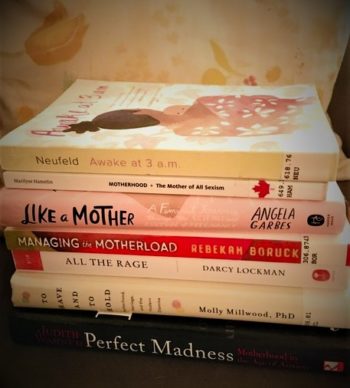 Just look at all the books dedicated to this – they all are geared to mommy blog readers, or mommy mojo sex fullfillment, or mama rage. And guess who reads these books and articles? Yup, moms and women. So, while I’m a glass half-full gal at the best of times, I’m not so sure this will change.