The Sacred Wound: Inanna’s Connection to the Stages of Initiation

As we start to transition into a new season and the final months of the year, I’ve been feeling called to the ancient story of Inanna. She was the Sumerian queen who lived over 3500 years before common era. She went on an epic journey when she heard that her twin sister was grieving the loss of her beloved while due to birth her baby. Inanna felt it was her sisterly duty to go and support her sister, not realizing that her sister carried bitter feelings towards her. After Inanna arrived, Ereshkigal killed her and placed her body on a stake in the underworld. It was after 3 days of death that Inanna’s community were able to come and tend to her body that Erishkigal felt compassion for her sister. It was this loving feeling that played a role in Inanna’s rebirth.

And so in the end, Inanna‘s journey is one of a descent, sacrifice and a death in order to be reborn more fully whole. She is now known as the Goddess of Heaven and Earth: It was in her death that she was offered an opportunity to be reborn more fully and also without her ego. (If you want a more in-depth psycho-spiritual telling of the story, check out Rachael’s podcast episode on Deconstruction.)
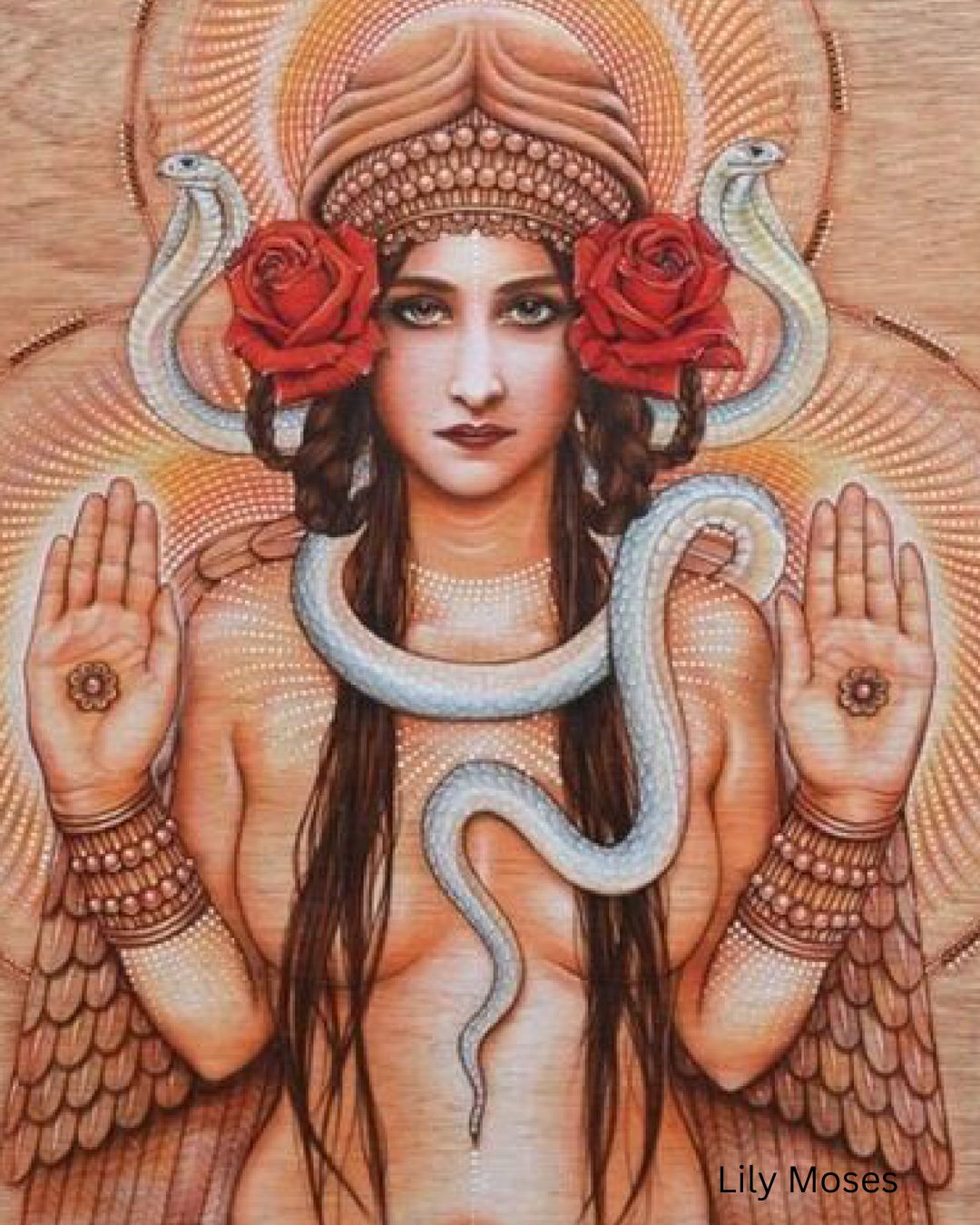
Inanna’s story follows a clear map that depicts the process of transformation. She needs to walk through seven gates down to the underworld that include stripping down, and removing the material items that have symbolized her queendom. As she becomes more raw and vulnerable, she also becomes more pure and complete.

There is so much more to this story but I like to think of this process as a weaving that is unfolding the Spiral of Life:
Incomplete → Something is missing and feel called to seek it
Death Portal → Everything falls apart – the job, the relationship, previous version of you
Awakening → The aha moment of a realization
Rebirth → Stepping into a more full expression of you

Mythopoetic stories offer us a map that weaves us through a journey. The threshold awakens time of in-between, and then flowing into the becoming and possible initiation. I say possible because we are not always aware of the potential. So many of us move through life uninitiated by it, closed to the possible full expression of our soul’s calling. It is our psyche that constantly moves us towards truth so that we can come back to who we really are. I look to these ancient stories of feminine archetypes and heroines’ journeys, as well as nature, as guides when I am on my own journey that leads to a threshold where I feel stuck, and I can’t see a way out. They offer us transformation literacy, by teaching us the flow of becoming, developmental transitions, and rites of passage. I know that humans have been here before me and what feels more like a guide or reassurance is this deeper trust that this is actually meant to be a journey of transformation, of maturation of evolving.

I’m not saying that trauma needs to happen in order for us to become whole, but rather when trauma happens the healing we embark on after is what can ultimately create a new pathway, as well as help us come back to our original blueprint before the trauma happened.

Recently, I had this realization that the stages of trauma therapy mirror the journey Inanna takes to the underworld and back. She moves down and through various gates before ultimately accepting her fate. Trauma therapy, according to Judith Herman’s model, moves through a similar arc: Resourcing for safety, stabilizing our memory and mourning intentionally, and then integrating this story into our everyday life. Post-traumatic growth offers folks a chance to offer their lived experience to others who are newly on the path of healing.

I’m not alone in making this connection. I just starting finally reading Carly Mountain’s book Descent and Rising. Her book centres the Inanna myth as a way for us to see her story in us. I noticed how Carly refers to Erishkigal as the exiled parts of Inanna and it make me realize that this ancient story is a great depiction of Internal Family Systems and the healing process of integration. “When Inanna descends to meet Erishkigal she enters a healing journey to embrace what she has abandoned inside of herself.” Maybe somatic therapy and parts work is in fact the modern-day version of Inanna’s feeling her body morph as she moves through the gates. Maybe the items that she removes are protectors that have gotten in the way of her full self. Maybe it is not a coincidence that it 7 gates she must walk through – we have 7 chakras in our body.

Healing includes grief tending because trauma includes grief for what was taken from us that should’ve happened. Grieving is also holding space for what happened that should not have happened. Stages of healing need to include time to mourn, which comes with its own arc of denial, anger, bargaining, and acceptance. As the body heals in stages, so does this practice of acceptance. It can take time to heal from each stage and healing takes time.

Let us also remember all the versions of who we were are still in us. They shaped us. That younger child that i once was, who believed in magic and played with fairies, she set a path of magic and intuition in motion. That teenager who rebelled – she taught me i have my own gnosis and truth and deserve to follow this path. Maybe i am just born again in my middle-aged body, not quite who i was too, but i am also an integration and immersion of all of the women who i was. Now, i am called to something more and i have the capacity to fulfill my younger selves dreams.
We are not meant to be alone.

We are not meant to go to the deep end without having a harness or life jacket.

We’re also not meant to always stay at the shallow end, not taking risks.

Growth and maturation happens when we find this balance of both.

Incorporating our heavy moments with the ones that are more easeful is how we can be our true most fullest expression of self.

Inanna as the Autumn Queen
Let’s go back and remember how we are nature too. The Autumn season is known as the time of perimenopause, and second spring is the first stage post menopause. These cycles mirror the seasonality of mother earth and all her creations. It is mirrors the butterfly journey: We are in the chrysalis during Autumn and this is the underworld cave that Inanna dies in. She is yet to be reborn as a butterfly.

“The female body is its own spiritual path. We have in-built rites of passage.It doesn’t work when we dig our heels in, claw the side of the mountain, clinging, trying to stay how we were. The ego has to die. Our self-perception has to die. And that is erotic.” Kimberly Ann Johnson

When we apprentice with nature and weave a thread of connection back to our ancestors’ wisdom, our everyday life becomes a devotion our souls calling is heard. When we embrace this truth of our story and the way that we can be of service it is a rebellious reclamation and remembering. That’s why I do what I do as a village tender and community builder. I know it’s my calling to build community in an intentional, sacred and natural way.

In her lovely book, When the Ache Remains, Lisa Olivera shares a process of Coming Whole to Self. It starts with a Descent that is clearly an underworld journey. Like the story, she trusts that we need to go inward and deep and do the necessary grief work to become whole. After that, we need to Face the Depths. This is when the Portal Opens – the pain needs to be faced in order for it to soften. Just like the goo in a chrysalis, it is during this alchemical stage that offers us a door to move Out of the Cocoon. We are unfolding and emerging. Only then can Integration manifest the wounds as medicine teachers. We need to accept them and not fix the scar. Finally, when we Surrender to Presence, it offers us the fullness of life – the joy, love, the pain and the grief. We can’t bypass joy because it is a way to honour and remember our infant self, the seed of the caterpillar that remains in us, only to be offered back to the soil of life. We can still hurt and feel deep joy. This is the whole-hearted way to become whole unto self. It means integrating the shadow parts of us, not running from them. Lisa Olivera offers us this truth: “The task is to stay devoted to your own aliveness, knowing it is the true path to wholeness, knowing it is the true path of fully living.”

I feel called to pause here and share that i write from my own perspective, and these reflections are about the mental, emotional, and psycho-spiritual perspectives of menopause, and so are not medically-based. I am not here to tell you what to do with your body and developmental changes. That is for you to decide. I am hoping that by reading this so far (a big thank-you by the way!) that you see that The Change is not all about the body and what we are losing. We also have the potential to gain something – our own life.

As I have been journeying through my own transformation through perimenopause, it’s led me through a path of realizing I need to offer support during this time in our lives. I see my role as a psycho-spiritual therapist as a womb to tomb midwife, a guide for someone’s Inner Inanna journey. And yes, we are all may go through this descent. It is when we turning inward into the body, and thus into the soul that we can be transformed.

And yet, it is not a given – not all of us of transformed by life’s initiatory rites. Becoming a mother is an invitation to descend and be changed, as is perimenopause. It is when we become aware of the gift of descent that we can hear our soul’s calling. And so integration needs to happen, not unlike a plant medicine journey. Having a ceremony on the other side can also be really empowering, because rites of passage are meant to be greeted and witnessed upon the return. Seeing each person as a unique template with different needs and paths is part of village tending, for both receiver and honouree.

Where do we return to after perimenopause?

Motherhood and menopause follow on arc. Becoming a mother is a deep initiation. It can re-open past wounds and is the death of something as you are becoming something new. Moving through perimenopause offers a transformation because we alchemize our shadow parts in order to integrate us and make us whole. Those hot flashes are your body’s call to action. That rage is reclaiming your full expanse of feelings. That brain fatigue is making room for your own creations.

Motherhood is at the beginning of our midlife and marks the bridge between the first half and second half of life. It can be a decent journey, but it is definitely an initiation. Not all rites of passage have a descent, but all decent mark a right of passage. Perimenopause is just after the arc and is a new descent that offers us a reclaiming of our own life and not just the roles we play. Each blood rite acts as an initiation to deepen into self.

Blood Rites of Passage in 7 Gates
Birth = our beoming
Menarche = be continue the maternal line
Sexual Awakening = be devoured and pleasure
Mother = vessel for life
Perimenopause = our renogiation
Menopause = wise elder
Death = Our rebirth

So what is the time in-between? This is the wet, impressionable Clay Time to deeper into truth. Perimenopause is the compost time to clear the path and the one chance to come into self. The second half of life is our gift to embody life learnings.
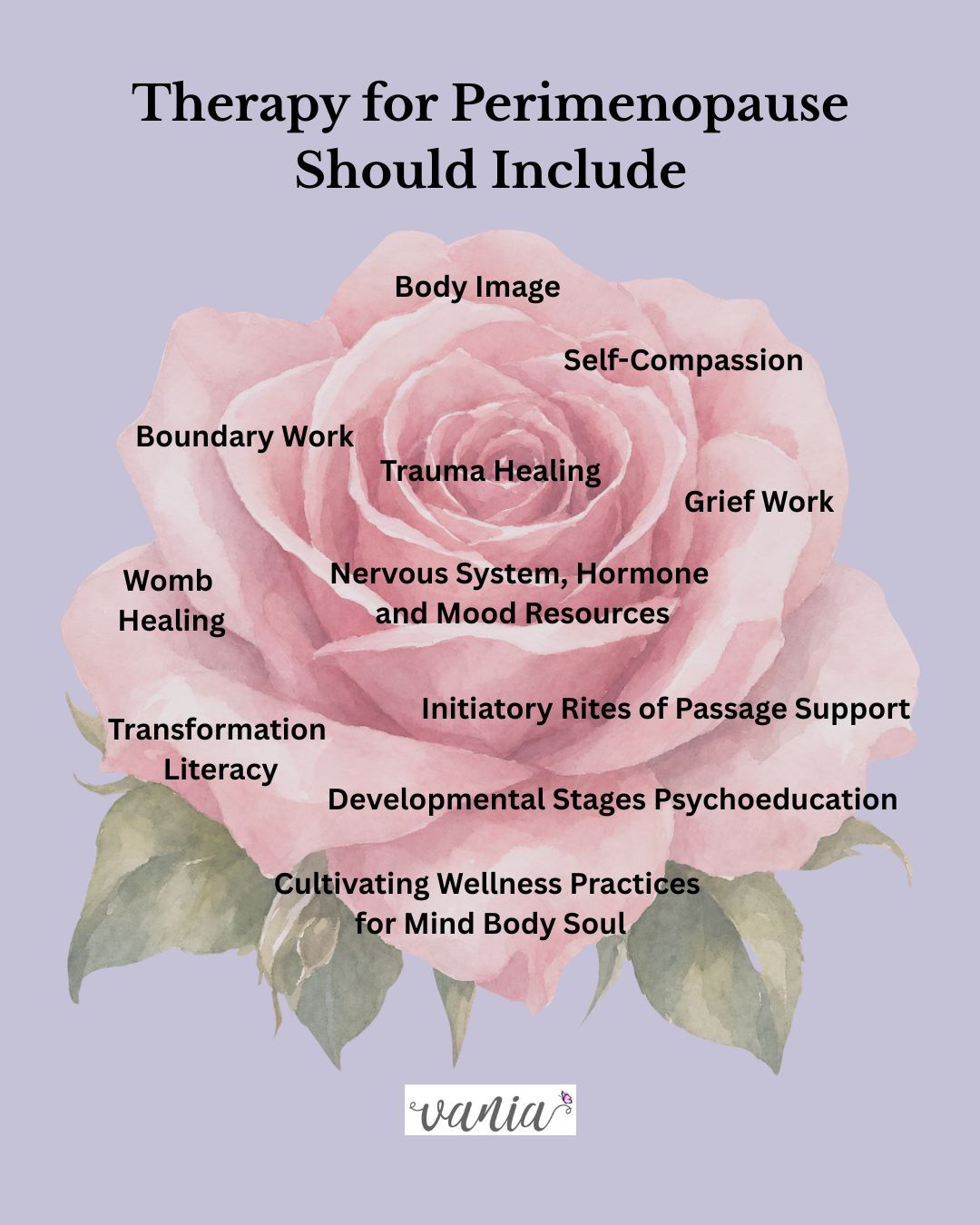
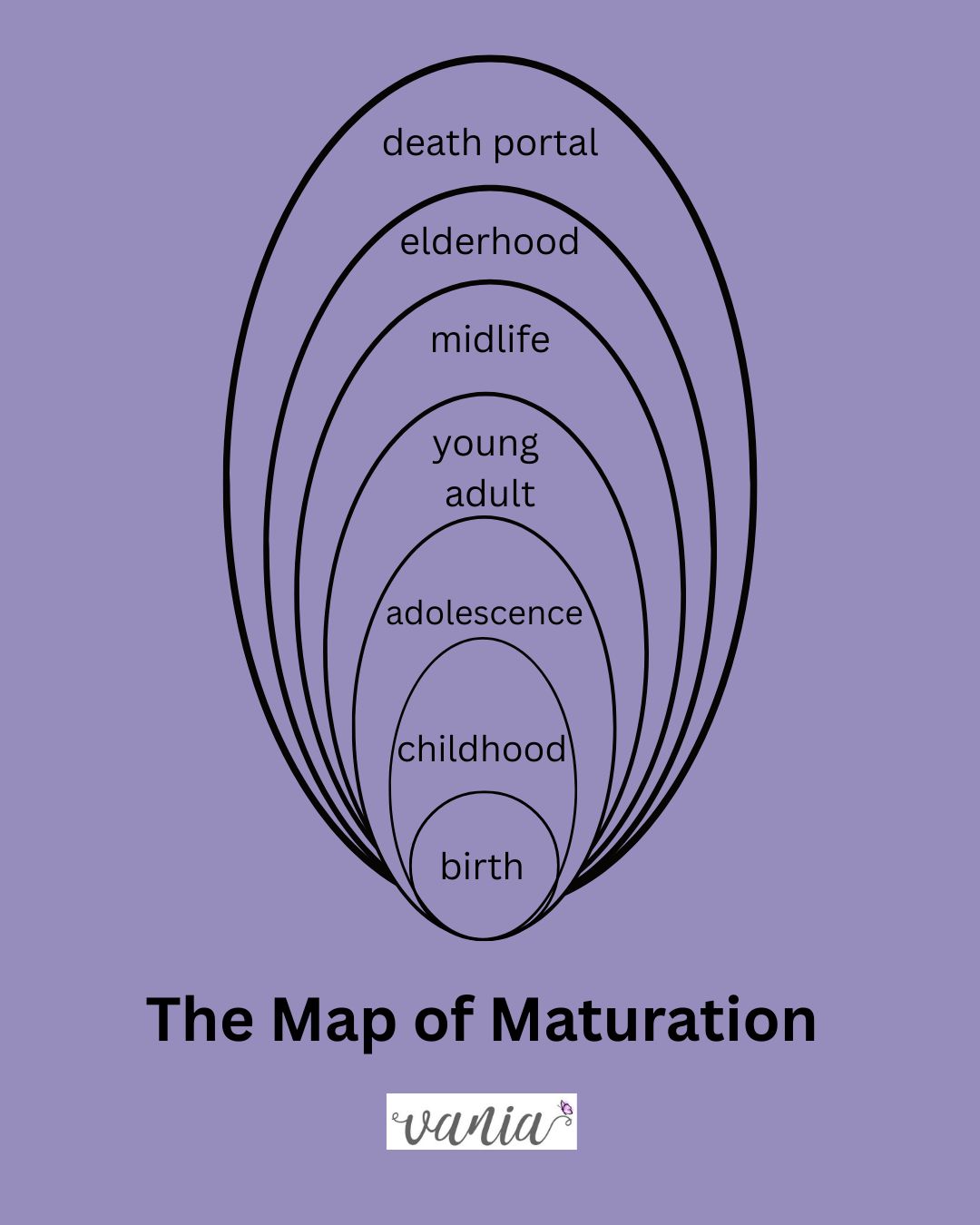
I’m so grateful that i studied human development in my undergrad degree. It focused on developmental stages and transformation literacy. When we can orient to what is changing, accept what is no longer, and build resources for this dysregulating time, we can embrace the unfolding. As Jessie Harrold shares, this allows us to eventually emerge filled with power and potential. Similar to adolescence and matrescence, this is the time to move through what Jane Hardwicke Collings has called Sageessence. This is the process of becoming a sage. That means, we need to integrate this identity into the rest of who we are. We need to weave the previous versions of ourselves into a new tapestry. We cannot go back to who we were before.

Before that can happen, we do need to slow down and grieve those old parts, paths, and identities. They shaped us even though they are no longer needed. We may carry disappointment about what didn’t get to happen, regret for what we didn’t try in time, and that needs to be held in order to be metabolized.

One way to help us embrace this new stage is to learn more about the spiritual aspect of transformation and learn some new skills and gather resources. This is not just a time for strength classes – we also need to remember what our calling is, what our magic is, what our passion is. We cannot have this wisdom without the embodied learning process. This fast fashion culture is making us lazy versions of our truest potential.

We can look back on Inanna’s story and see its relevance to the transformative power of menopause. Maybe perimenopause is the dark underworld cave of remembering and reclaiming that needs to happen. Maybe it’s not unlike the chrysalis of transformation that needs to happen in order to become more truly ourselves. Mabye Inanna was in perimenopause when she went through the gates.

We have entered an age of quick fixes. We also exist at a time of humanity that doesn’t revere our elders or mentors. We focus on the symptom and supplement without also seeing the transformative power of surrender. We have learned to want the answer without the depth and the transformation without the sacrifice. This leaves us unchanged and uninitiated. A full ascent and rising doensn’t work that way. Sorry, not sorry.

I love working with women in midlife: Who you’re becoming now is born from incorporating your wild self with your soul’s essence. Therapy and friendships that have the ability to go deep are a lot like in Inanna’s underworld journey. They can go deep and also be a safe, brave space to be witnessed in the depths. This helps us feel less alone so that when we do come back up we’re not alone.

I want to go to the depths of your sorrow so it can be alchemized as a place for healing.

I want to accompany you to the descent so that we can come through it and experience the ascension of our full self.

I want your body to feel safe enough in my presence so that you can share those things that you have told no one, so that you can experience the felt sense of the missing experience of connection, trust and being understood.
Raising Teens: Becoming the Lighthouse

I am just back from a vacation of a lifetime with my youngest. It was our first ‘just the two of us’ trip. It was to honour her passage into high school, and so l gave her a girls’ weekend at a favourite city with all the perks of a city that never sleeps – shopping, good food, and lots of selfies.

This summer has been all about marking this developmental transition of adolescence. My big kid was home alone overnight for the first time, we had our first parents-only camping trip, and both kids got a big trip with just one parent. This is us honouring what is ending and also becoming. And, i don’t mean what is happening for our kids. We too as parents are in a transition season: The end of school-age parenthood needs to be honoured in ceremony. It may not be a major life transition but it is still a rite of passage.

I’m glad i’m not alone in wanting to honour these initiations with some type of pomp and circumstance. I’ve been watching the show Sterling Point with my youngest. It has been such a good bonding opportunity as we watch certain episodes, stories, and themes. We have a cottage near the location so it’s an added bonus to watch the show from this vantage point. One storyline that i loved was how the group celebrated Maple starting her menstrual cycle. They made her a flower crown, howled like wolves, and shared advice. I had a ceremony for my daughter when she started her menarche. At the time, she was not as into it as i am, so seeing this portrayed in the show was really exciting for me. It normalized ceremony as an important part of growing up. If you want to see my hot take on the show as a therapist and mom to teens, take a look at my recent instagram post.

In the coming weeks, both my kids will be in high school. This is a pivotal rite of passage for me as well as my youngest kiddo. It dawned on me only a few weeks after school ended that I need to honour the rite of passage for myself. It was our last year at the same tiny alternative school both my kids started at when they were a mere four years old. She celebrated the end of an era for herself. She had a party after-party, and got all dolled up. As much as we honour commencement and ceremonies for our kids when they’re moving through different pivotal stages of school, we also need to have a way to mark this for ourselves. And so this is something I’m noticing I need to do as my youngest starts high school.

And so, I am working on crafting a ceremony for myself to honour the arrival of high school. I need to mark this transition for myself, and i suspect other mothers will gladly participate to honour this threshold for themselves too. Plus, i am always looking for a good reason to host a ceremony.

It is time we brought back more ceremony into our lives, and less superficial celebration.

A rite of passage is not just celebrating the transition. It is needs to include some work and letting go. It needs to honour what is ending and also offer a bit of elbow grease. Marking it in this way offers the somatic experience of The Return, the coming back but anew felt sense. In Arnold van Gennep’s Book, Rites of Passage, he shared that this step is key and often overlooked. Having time to to integrate an experience is as important as embarking on it. We may not go on pilgrimages as a society anymore (though i definitely advocate for one) but we can practice a modernized version of a quest. It might look like a camping week, a portaging adventure, a summer work experience, or a trip.

Maybe not the most fancy of activities, but one thing we did was request some household projects to be done by our kids. As part of my teenagers experience for the summer, we had them do a few tasks and chores around the house. Some of things that they’ve never done before. And so when my eldest was sanding down the deck, I noticed they were sitting on our rickety outdoor dinner table. I asked them to not sit on it because it was precarious. They grunted and complained and rolled their eyes at me, but stood up. An hour later, they came up to me with the invisible tail between their legs and admitted that they sat on the table again and it cracked.

The moral of the story isn’t that they did the thing I told her not to. It’s that they felt safe to come and tell me they did the thing and knew I’d be upset and possibly even say I told you so and they still came to me because they couldn’t fix it alone. They trusted that even if I was angry at them that the love was always going to remain.
This is what I want to happen if they were ever to do anything out in the world that made them feel scared or in danger: To call me no matter what.

As the saying goes: Small kids, small problems; Big kids, bigger problems.

Raising a teenage daughter today is a modern-day version of the myth of Demeter and Persephone, but the lure is social media and not Hades. Or maybe social media is the new Hades, in a more modern trickster suit. I’m fighting to keep my daughter close but I am competing with a greater force and that is her phone. I’m not fighting my kid about her phone, I’m fighting the attention the phone takes from me. Our smartphones were supposed to be a place we sometimes visit, not a place that we live in all the time. This is my work-in-progress project. As my teen enters the high school jungle, i know that i need to hold onto her a bit more. My grip may not be as tight but it needs to remain nonetheless.

I’m needing to do that consciously and not reactively, so that I don’t fall into anxiety and instead have a clear path that helps me stay clear and secure. I need to also do this in a way that doesn’t lose myself in motherhood as I enter my new Virgin territory.

Many of us are raising children and being parents as an over-correction because we were raised by parents that were emotionally immature or unavailable and so we want to be the most present, attuned, available, and understanding parents to our own children now.

I remember having fights with my own mom about my friends, how long i was on the phone at night, and our competing needs. Now i see it as normal teenage woes. Back then, I grew up being told by my mom “wait until you have a teenage daughter. That will be your karma.”

Maybe it’s not revenge that my kid is giving me a hard time. Rather it’s destiny as a developmental stage. Teens are meant to protest as a way to build individuation. I know this now. I also now see that my mom may have been going through perimenopause at the time i was a teen, and i really wish this was spoken about then. I get back to this point soon.

A part of healing these parts was to first unlearn that anger is scary or destabilizing so that my children can embody it more fully.

I have internalized a wound of unprocessed anger due to ongoing unmet needs, and it is what is fighting with my child at this developmental stage. What i couldn’t say to my mom back then is hard to hear my kid say to me. It’s not karma that i have a sassy kid. It’s a pattern that has taken generations to get to me, and i can now heal what wasn’t repaired. My own Inner Sassy Teen Part is very headset on being able to say what she needed back then. My Mother Parts need her to remember that my kid has her own needs now.

Our teens also lose the mother that they had as a younger child themselves. Gone are the play-based days, the years of wonderment and mini-me dress up. We must grieve the end of that chapter, so we can accept and birth this new one that evolved from it, and also offers more depth and closeness in the present.

‘Becoming a mother leaves no woman as it found her. It unravels and rebuilds her. It cracks her open, takes her to her edges. It’s both beautiful and brutal, often at the same time’. ~ Nikki McCahon

Matrescence is the adjustment period to motherhood, and I think this initiation of becoming a mother to teens needs its own great passage or marker so that we don’t step into it unconsciously or uninitiated, but rather with our eyes wide open. I thought i was moving out of the stage of motherhood, only to realize that it is more that i was moving into a new stage OF motherhood. I was getting excited to claim the identity of Mage/Queen/Virgin, but i am not there yet: I may be perimenopausal and i am still mothering. I’m a baby mage, eager for this new stage of life but it is not yet where i stand.

I’m still crawling.

I am one of the mothers now who are in perimenopause while my children are in puberty. We are not supposed to be at these intersecting stages. In a recent issue of Hot Flash Mag, Jessie Harrold says it so well: “Here we are losing that biological wiring to nurture, and our kids actually need more from us than they probably would have for our foremothers. So there’s this real tension and conflict. The mothering I thought I was going to be doing at this age is very different from the mothering I am doing, which is far more intensive.”

A part of the becoming that happens is that we put on a new suit as advocates and mama bears for our children. No one‘s going to have our kids back like we do; even when we say no to our kid it’s because we have the best interest for them in mind. The tension is that our kiddo may not see it that way, and we need to stand our ground. This is where the messy hormonal conflict can pay a role, and be a toll on our connection. I need to remember my role as a parent is to guide my children to their fullest potential, to grow and evolve, to reach maturation. For this wisdom, i thank Gordon Neufeld.

Parenting teens is learning to embrace your new role as the lighthouse keeper. You are now watching from the beach. You are close enough to touch them, to see and hear them and just enough distance for them to find their own way. In Kim Jon Payne’s book, The Art of Discipline, he offers another theory – the 3 stages of Parenthood – the Governess, Gardener, and Guardian. I am embracing the newly minted Guardian role. It is a time of becoming the guide for my children, not activity playing or weeding like i have been.

Whenever i get a bit lost in the waters of motherhood in modern-times, i come back to my anchor, that is remembering my role as a mother. In their book, Sil Reynolds (now Read) and her daughter Eliza, Mothering and Daughtering, offer us some insight and guidance on how to move through this messy stage. To start, Sil shares that “Mothering” can be seen as a verb, the action of helping our children become the adults they are meant to be. She also offers that we need to incorporate intentional quality time together – like my big trip with my kid and watching teen dramas together. It also serves us to understand counterwill and learn to read our child’s cues. This has been such a life saver of mine over these last few months. And it’s still a work-in-progress.

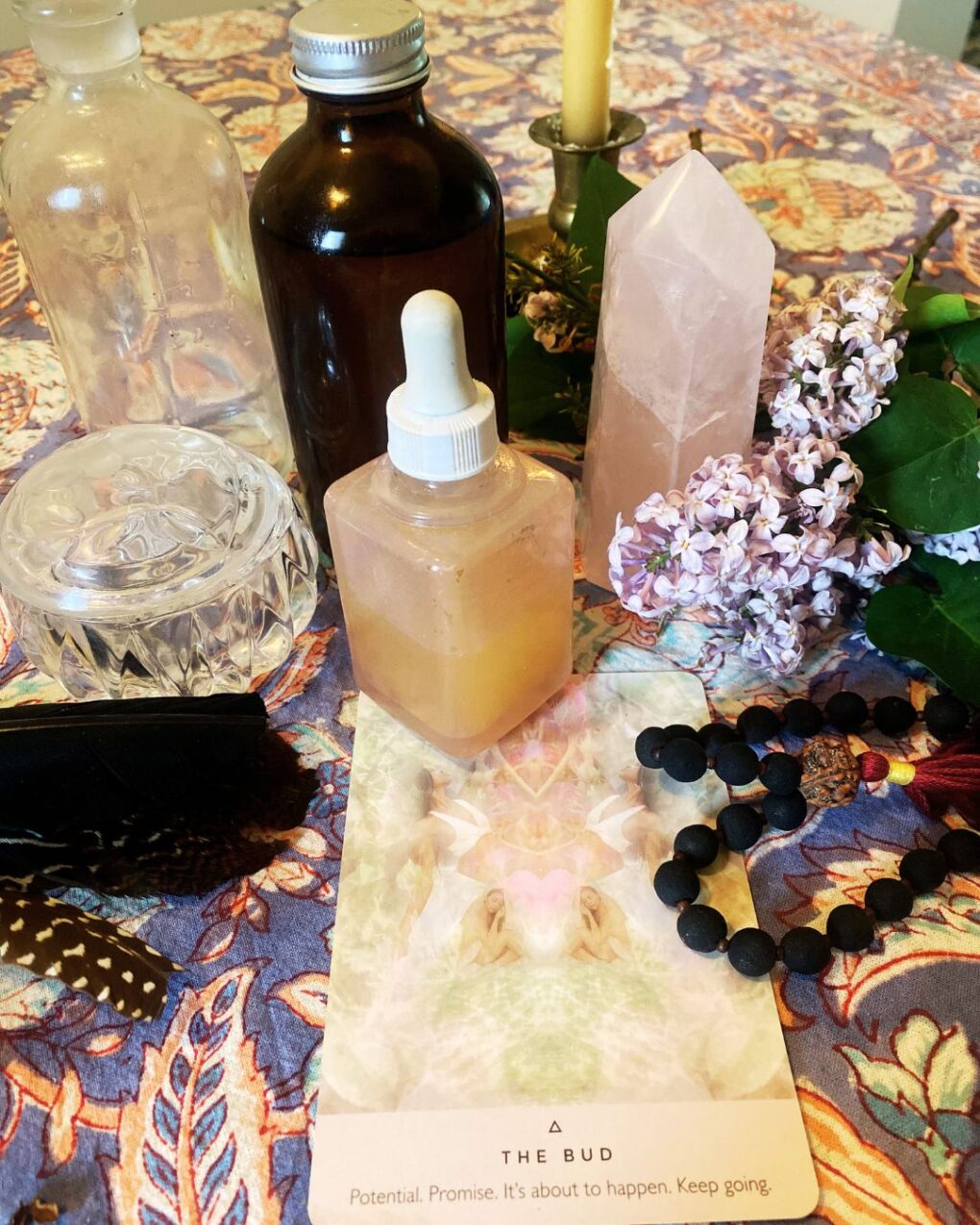
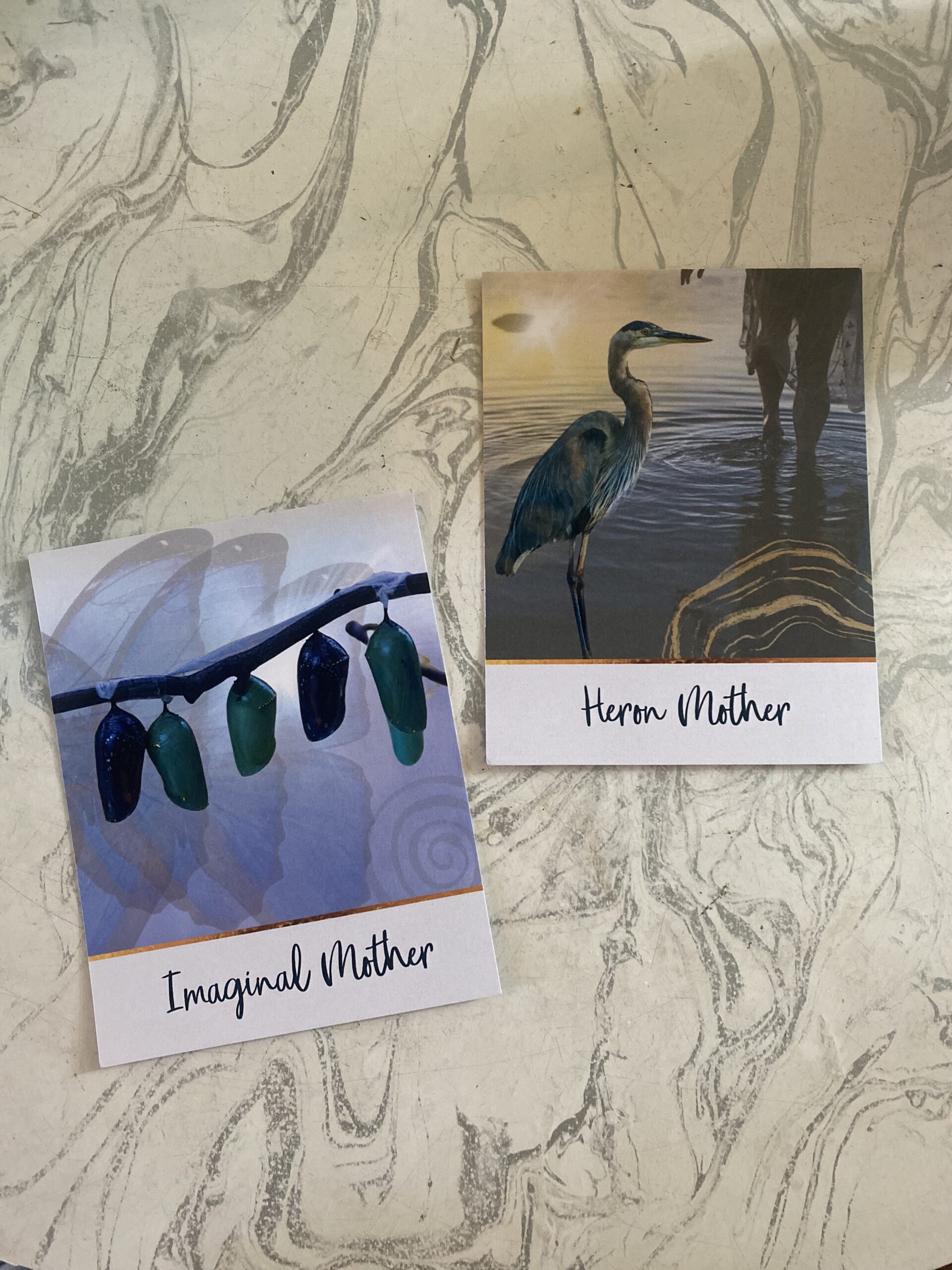
I was recently gifted a beautiful deck of cards by my friend Jessie Harrold. She wrote the wonderful book Mothershift, which is a guide through matrescence and finding our north star as parents. This deck is a visual reference that helps us see what kind of mother we are at a specific moment in time. I am no longer the Crafty Mom or archetype. According to Jessie, I am the Heron Mom: I am walking the threshold between who i was a mom and who i becoming. That means i need to trust the magic and also grieve what is no longer true. I can feel the pull of the Imaginal Mother who is becoming who i truly am, but it will take time to mothermorphize (a word Jessie and i made up) as my kiddo has to adjust to being in high school herself, first.

Speaking of getting lost in the waters, one thing i do when i feel like i’m drowning in unfamiliar waters is to seek out who has been here before. This new terrain of mothering teenagers may be new to me, but i am not the first parent to do so. This is not uncharted territory. Ideally, this is where mothering mentors come in. I have found some older mothers in my life that i can turn to at times, but not consistently or for the actually themes i need support in. Since we live in a society that is void of true mentorship, i have to turn to some other guides. Folk tales, myths and the timeless stories of our ancient ones and ancestors.

And, for me that includes looking at mythopoetic stories that depict motherhood in universal time and space. It’s a good thing that there are many examples. One of my favourites is the story of the Greek goddess of Harvest, Demeter, and her daughter Persephone. It is Persephone (or Kore’s) journey to the underworld and her mother’s grief of losing her daughter that we can thank for our seasons.

What i have also found is that the story of Persephone as many variations. For instance, Carolyn Elliot shares in her powerful book, Existential Kink, that maybe Persephone’s journey was in fact subconsciously manifested by herself as a way to integrate her shadow parts and becoming whole. We need both our conscious and unconscious parts to complete us after all. And maybe, Persephone’s flight to the underworld was her way to get space from her over-bearing mother. Maybe she needed this time to find out who she was. So she rebelled and flew the coop (like i did at 16, incidentally). This allowed her to find herself and integrate the tension of opposition and reliance, struggle and ease, independence and connection. And Demeter herself had to reckon with the truth that her daughter needed to find herself separate from her role as a daughter. I like to think that Demeter had to grieve losing her daughter as a maiden in order for her to find herself in mid-life as a woman herself, and not just her leading identity as a mother. In her acceptance and surrender of Persephone’s individuation, Demeter was initiated into Virgin Mother territory – a woman who belongs to herself first, who is whole unto herself and who has the qualities and strengths of a Mother. She no longer puts her needs last, she models that having needs is not only okay but a part of being human. In fact, it is through her practice of caring for herself that she is paving the path for her child to reach individuation and maturation herself.

So maybe the story of these two goddesses set the stage for us all along. Maybe they carved a path for us to follow but we forgot that Persephone needs to find herself on her own, and we are meant to grieve what is ending – not the relationship but itself but the duties that came with it change over time. Grief means needing to say goodbye to what was in order to become anew and also find our new meaning. Maybe our modern-day experience raising daughters is not that different than Demeter and Persephone’s. What offers me solace is that it is just a stage and Persephone comes back. When we trust this, it makes the grief in Winter tolerable.

Menomorphosis and The Lost Art of Ceremony

As part of my initiation of turning 50 last year, i gifted myself a last step of integration that came with this pivotal birthday. As i have been immersing myself in womb healing training and offerings thanks to my perimenopause awakening, i felt called to receive a womb massage called Sobada from a traditional Mayan healer. Mexico has a special place in my heart and connects me to my mother. So, i took my family to Mexico. I spoke about the trip a bit in another post.

This part of my passage was transformative. The massage and womb ceremony were just what i needed to tend to my changing body. What happened at the end is what will stay with me for years to come. During the session i received Closing the Bones medicine. My body was encased in fabrics that are indigenous to Mayan culture. They are sacred, woven scarves called rebozos that create a womb-like holding of the body, very much like a chrysalis or Egyptian mummy.

“After decades spent waiting, she took her place as an Elder when those elder than her had not, because those elder to them had not. She initiated herself so that one day she could initiate someone else.” ~ Rebecca Campbell

My eyes were covered the whole time, and this offered me more internal visioning. It brought me down and through. It was during this descent that I felt the presence of my grandmothers. As my bones and body were put back in place, my red thread line joined me. My mother and grandmothers came to be with me from beyond the veil. They sat at my feet and offered me company, presence, and the missing community i have been searching for. What they also shared with me was gratitude for my decision to provide myself this loving touch because in doing so, i was also healing them. My healing was their healing. And i received the closure i needed, as well as the confirmation that i am on the right track.

What a true honour to be held this way. This session offered me the clarity and confidence i needed to step more calmly onto my next stage of life. In more ways than one, i am evolving.

Our ancestors knew something about gathering and marking times of change. No matter where your people are from or what they celebrated, it was with reverence and ritual. Births and deaths were honoured, sacred unions were celebrated, and all were seen as sacred passages of initiation and transformation.

We have lost this art of being in sacred gatherings. Our mothers and grandmothers maybe didn’t get to have this honouring as ageism and misogyny stole this from them. I never got to see the goddess rise in my own mother. Moreover, I wasn’t able to realize that my mom was a goddess. I am healing this mother wound and gate of grief in real time now, even after my mom’s death.

In a few days time, i will be offering a ceremony for women who are standing at the menopause threshold, or have already crossed it and didn’t get to experience an initiation for menopause. It is never too late to experience the ceremonial medicine that marks the blood rites of passage. I am doing it as a way to honour my mother and what she didn’t get to receive. I feel like i have her blessing now that she has been present during this stage of my becoming.

My mother’s death was a catalyzing experience for me. It created a shift in my timeline, and i think ultimately brought me back to my original blueprint. For the last 4 years, i have been learning the sacred art of anointment, both as a way to fully embrace my priestess path and spiritual devotion as well as honour my lineage. My mom was a chemist, and studied aromatherapy and essential oils. I inherited her many books and supplies about aromatherapy, herbal medicine, and plant allies. I will never know the whole story about her inspiration, but i do know she wanted more for her life and turned to creating art like this, so this is part of my motherline. I am finding my own way with it, by incorporating the oils i make with love and intention as part of my rituals and ceremonies, and regular devotional practice.
The stages in between times of transition, of blood rites and rites of passage like adolescence and perimenopause are thresholds. They are the liminal space between two landings. This is like the chrysalis stage in the story of becoming a caterpillar. Known as clay time as things make more of an impression of who were becoming in these rites of passage, we need to be held during this messy and tumultuous time.

In the book, The Menopause Brain, the author shared coming across the word “menostart” as an alternative to menoPAUSE. I appreciate this reframe because it is not true that things are only ending at this stage of life. So much also begins. Or at least there is the potential for it. That’s why we need to honour it with ceremony in order to reclaim this stage of life with the reverence it deserves.

I came up with a word that truly encapsulates this change for me – menomorphosis. It creates a helpful frame for the transformation that comes with menopause. There truly is alchemy in the goo that is perimenopuase. It is not just a fertile void or hot sweats – it is the fire that is coming back alive to help create something new from something old.

Thresholds like perimenopause offer us a chance to slow down and find intention in the initiation. Similar to pregnancy and birth, they offer us an invitation to step into our full experience in this rite of passage. Rites of passage are initiatory acts of crossing from one chapter in our life to another; from maiden to mother, to sage and crone.

“Initiations are a sacred offering of what needs to die so that we can live what is ours to live.” ~ Blaire Lindsay

Perimenopause offers us a reset. It is a time to step into our power as a woman and it offers an initiation of a spiritual transformation. The act of being witnessed through the change offer us the chance to step more confidently into the next chapter of our life story. Otherwise, we persist in a spiritual purgatory of sorts, a liminal space between two worlds. When we are not held in community, our soul and psyche struggle to find a place to land; it is our soul that is in crisis.

Pause before the Change
Developmental stages are physiological changes we all go through. Rites of passage fuse the science and biology of developmental stages with the spiritual initiation that is meant to support it. When we bring ceremony into the change, it facilitates a deeper initiation and ultimate ascent. We have lost the language and relevance of ritual and ceremony. This may be because we wanted to separate church from state, but i think it’s also because men in power didn’t want the strength and expertise of women to shine. It is in medicine, shamanism, ceremony and gathering that women are strong after all.

We need to endure the hardships in order to embrace the gifts that come with menopause.

While we surely need to embrace this inevitable change, we need to grieve our former self and what is now over. I’m not even talking about our bodies here. Don’t get me started on that, or maybe that is another journal yet to be written. This transition does come with a change in our energy and capacity as we clean house so that we can shed what is no longer needed. Luckily, with this loss comes an awakening – the birth of our “I Don’t Care” part – that had to grow out of the burn-out of the Good Girl and What About Me parts of us. What may be a consequence of that is the added loss of relationships as some folks who preferred us nice and polite will struggle with our new-found liberation.

A Way with Words – The Etymology of Words
The word sacrifice offers a hint to what is at its core – The root word of sacrifice is ‘sacer’ – to make sacred. So, when we sit with this reframe, we can see initiations as a sacred offering of what needs to die so that we can live more intentionally with what is still alive in us now. Sacrifice requires courage, devotion, and trust. It helps to think of our body as a story book character experiencing a fairy tale arc of surprise, surrender, and transformation.

Rituals bring us back in rhythm with life, and offer more harmony with nature, life, each other, and spirit itself. The word ‘rite’ bleeds right into its home in ritual. The Sanskrit word for ritual is rta and means ‘cosmic order’ or a natural flow of the universe. If we want to reclaim this ancient and universal understanding, this primordial truth, we need to remember that rituals are designed to honour significant moments and transitions in our lives. Be it starting school, graduating, our first job, or break-up, our home, all are thresholds we are meant to be walked through, not step across alone.

There is a song i love that keeps reminding me that life is a ceremony. We don’t need to host extravagant galas or go on expensive retreats to live a ceremonial life. The root of the word ceremony is ‘caerimonia’, the Latin word means sacred rites, religious worship, and a felt sense of awe and reverence. It is no wonder then, that being in ceremony changes us. It is meant to as it offers a deeper connection to our wombic home. Ceremony weaves us back into the original fabric that is our full aliveness, and it offers us a reminder of our shared existence on this living earth.

I have spoken before that ritual and ceremony are the first practices of therapy, of mind and soul medicine. In their beautiful book, The Seven Circles: Indigenous Teachings for Living Well, Chelsey Luger and Thosh Collings share a detailed list of benefits that ceremony offers folks. Participating in ceremony as a witness as well as the main guest of honour offer similar balms for ourselves. It can strengthen our community and re-villaging hopes as it restores our relationships and strengthens morale; it fosters both spiritual health as well as reminds us of our place within nature and the land, by also expanding and deepening our worldview, and it regulates our bodies to prepare for other life transitions.

It is through the practices of ritual and ceremony that we can mark a clear arc and story – through a beginning until the end. There is a clear container and they are meant to change us.

“A woman’s initiation includes many moments of crossing a threshold. This threshold is the bridge to our feminine soul, and crossing over is the beginning of becoming.” ~ Sue Monk Kidd

We are meant to be seen in our new skin upon stepping through the threshold. Group ceremonies that gathered folks together offered the witness element that is so missing now. Where are our elders, the village aunties who can pass down their wisdom? It is no wonder that social media is having a hay day with perimenopausal folks sharing their experiences – gone is the sacred ceremony and instead we have Instagram and Tiktok. This loss of feminine rites of passage has made way for a fabricated and soul-deprived world, and this loss highlights the even bigger theft that is the degradation of the Sacred Feminine.

Body and Soul
Since we are a body and also a mind and soul, it merits understanding that our identity also adapts, grows, and ultimately evolves with each threshold we step through. In order to become whole onto ourselves, we need to find our centre, that soul self within so that we can come into balance. This is where we can focus so that our self energy will be strong against the tides of change and external dis-ease. This is where ritual comes in, as a way to deepen into our devotion to our life.

For women and womb carriers, we have our own unique reproductive codes that mirror seasons. Starting from our mother’s conception and birth, flowing through to our own conception and birth, all the way past our birth, menarche, sexual initiation, and possible birth of our own children, we weave a tapestry of our lives right within our body. Each month offers a rite of passage with the phases of the moon, as well as our menstrual cycle – rites of separation, transition, and integration. Surely these are physical transitions and they are also emotional and spiritual. They are also relational simply because we are relational beings who thrive in connection, and become more fully actualized and initiated when we are witnessed and held.

“Without rituals to make a firm demarcation between the profane and sacred, between what is us and what is not us, we tend to identify with archetypal patterns of being – hero, Father, Mother, etc. We forget that we are individual human beings; we allow ourselves to be inflated by the power of the unconscious and usurp it for our own. And we do this not knowing what we do and that we do it.” ~ Marion Woodman

It is the birth of our soul self and nurturing it that we come back in right relationship with ritual and the sacredness of each day, moving it from mundane and ordinary to divine and universal.

It is our soul seed that waits for us to find her, to nourish her, as it is this deeper connection with ourselves that allows us to move through descent and ultimate initiation. When we take time to listen to our inner knowing and wisdom that resides there, we can be met with our fullest self and move through life with more intention, presence and joy. It is a reclamation of coming home to self. When we drop the ego away and remember that our soft strength is in that seed, the soul guides us. We need to only listen.

Our body experiences this rite of passage so it’s more of a descent than an evolution. Like postpartum, we are not meant to bounce back. If we can reframe developmental stages as initiations, we are not as surprised by the sacrifice that is left on the altar. In this case, it is our former body.

If our body is a map, it is also a temple. I liken my womb to being my oracle so i treat her like an altar. I have learned to bow at her wisdom, and hold reverence for her story, as it is not mine alone. It is also my mother’s and all the mothers who came before me. It is also my children, and those that have yet to come.
Midlife is a threshold to get back on track.

“There is a time in our lives, usually in mid-life, when a woman has to make a decision – possibly the most important psychic decision of her future life – and that is, whether to be bitter or not. Women often come to this in their late thirties or early forties. They are at the point where they are full up to their ears with everything and they’ve “had it” and “the last straw has broken the camel’s back” and they’re “pissed off and pooped out.” Their dreams of their twenties may be lying in a crumple. There may be broken hearts, broken marriages, broken promises.” ~ Clarissa Pinkola Estés

We have forgotten that it is in mid-life that we are meant to retrieve our soul. Human developmental theorists like Carl Jung, Marion Woodman, Rudulf Steiner and Bill Plotkin show us this clearly. They also suggest rites to honour these bookends, or chapters of our life. It can be pilgrimage, quests, or sacred fire and moon dances. It can also look like a fresh hair cut or boudoir photo shoot for your eyes only.

I don’t need more information and content creation from 20 and 30 year olds who know things, surely. I love them for their passion and commitment to living their best life. What i need are elders who have walked a similar path to me already, who know something about life. Who laugh at the ego that gets in the way and instead embody eros without a second thought.

“Sagescence brings with it many gifts. We become more self-focused and motivated to take care of ourselves. We are gifted with the opportunity to heal all the unhealed parts of ourselves.” ~ Jane Hardwicke Collings

Healing is indeed a part of this process. We need to heal what is not repaired so that it stops being the force that moves us through life. That means we have to remove the internalized patriarchal lens about how we have been living our life till now.

It also means needing to heal from our own past experiences and trauma, as well as ones we inherited.

I don’t want to grow bitter or resentful, and fade away quietly, unseen and ignored. We need to shed the roles that keep us nice, polite, oppressed & repressed. (Thanks Sarah Durham Wilson for this phrase).

We need to remember it is our own life we are here to live. We aren’t here to take care of others and not rest or attune to our own pleasure, only to exhaust ourselves and die after a life of stress.

It is never too late to offer yourself a ceremony. Any time we do something with intention and ritual, our soul seed blossoms. This also allows for more healing and completion to happen, especially for the blood rites from our past that were not honoured. Maybe your menarche was not celebrated, or your baby shower was more a party than a women’s circle. It is never too late to complete the initiation that is woven in your womb – they are all connected as one red thread after all.

If we can walk our human journey called life with our eyes wide open, with a consciousness of knowing about where we’re meant to be going, we don’t just find ourselves in mid life stunned about how we got here. We can instead arrive at it with more surefootedness and clarity.

Being in ceremony offers you this commitment. You can’t go wrong when you commit to yourself.

In the Womb of Winter: Midlife Apprenticeship for a Future Crone

We are in the final weeks of Winter where I live. It’s connected to the sacred feminine energy of the Crone, the elder matriarch who models rest, wisdom, and patience. Winter is seen as the menstruation time of shedding, of turning inward, of pausing. The crone also embodies the dark feminine qualities of not caring about what others think of her, and being able to create on her own terms for her own needs. She holds the balance of sovereignty and solitude, and sits at the tension of becoming conscious as an elder who embraces love, joy and compassion, instead of resisting them and living from a dark and disparaging place.

In North American overculture, we have not revered our elders, especially our grandmothers and older women. Patriarchy has intentionally cast them to the side. Our modern-day witch trials all but made this so. Gone are actual fires (thank goodness) so instead are offers of botox, hormone supplements, and weight loss programs (called Raven no less!) to keep us looking young, beautiful and vital.

We don’t have to look far to know where this is coming from. These first 2 months of 2026 have been accompanied by files that have opened up the dark side of humanity, to no one’s surprise really. These are the pandora box nightmares of our times. It also confirms that the patriarchal Kings of men have been grooming us all to stay young-looking, and ultimately reliant on their products, preferences, and power. It is inspiring to see how many of us are resisting this oppressive and violent system, creating by pedophilic patriarchal men. It is long overdue.

It is not lost on me that we live in a world where blood is shed in war and violence, and yet it is monthly blood and anything to do with the womb that really terrifies men in power. We don’t have to look farther than these files that remind us just how young and pre-pubescent men in power want women to be, before we claimed our power.

In her book, The Owl was a Baker’s Daughter, Marion Woodman wrote, “I cannot grow in the life of the spirit until I grow to love my body. Only when [women] surrender to that spirit will their body reflect that totality instead of seeking the spirit outside, women must learn to hear the voice of their own abandoned self, and that’s reconnect with their own inner mystery. The woman who has not found herself in her own body is dependent on a man to help her to be born on this earth, and is therefore inclined to project herself onto the man she loves. By whatever route, she must find her own God within.”

I have been resisting internalizing the male gaze and preference for many years, and yet it can be so hard at times. We are inundated over and over again and absolutely without our consent or full consciousness. The story that the ideal woman is of a certain age, calibre and creation. Perimenopausal women are forced to fight against this inevitable unfolding that comes with age. We need to embrace our changing body as a natural life stage, like puberty. It is not a disease! This means having autonomy over how we can for our body, as well as address our internalized sexism and ageism.

We don’t have to look any further than social media and pop culture to know just how true this cultural norm is.

I’ve been watching a show that captures this tension quite well. It’s an older show that I only recently discovered and seemingly have become a bit obsessed with. It’s called Younger and is the story about a woman in her early 40s who can’t find work after her divorce, and so decides to portray herself as a much younger woman in order to be employable.

While it’s entertaining to be sure, it does provide just enough of a dose of satire and a feminist lens to still be seen as light. And yet I wish it was even stronger. Though my journal here isn’t a review of the show, it makes my point that women of a certain age become more invisible as we age; the show has only mentioned perimenopause and menopause one or two times in one episode (though i’m hopeful it comes up again in later seasons). and of course, the fact that this actor portraying this woman is young-enough looking to pass for 26 is also something to not glance over.

I also love spending time with multigenerational women, for the most part it’s with women 15 years or even 20 years younger than me. What inspires me about that generation is how they are already embracing their spiritual soul in a way that I never got to then. We need these mutually beneficial relationships where support is reciprocal. There is strength in these bonds. And yet, i can’t help but also notice that there are no elders for the main character. She has a couple of friends her age, and yet there’s no one to guide her to reclaim her rightful place. There’s no one there to help her see that she is already valid and worthy based on all the experience she’s had.

It’s also hard not to notice the reality of her needing to become a maiden in order to start over again after divorce. The rite of passage wasn’t completed so she has to start over and have this do-over opportunity. I don’t know where her parents are: She’s a bit like me, flailing without elders and so it gives me pause to remember this challenge i am taxed with. As I enter 50, I’m in this midlife portal, midwifing my way through midlife. I’m nowhere near becoming an elder, and yet I think if I really consciously embrace each life stage, it allows me time to apprentice with elderhood: To really learn about what I will need to be an elder for my children and others, what tasks and skills i need. So I’m doing it now – gathering and gleaming gems of wisdom so that I can store them away in my cauldron of transformation that might come out if I’m lucky in 20 years. It’s a time capsule in reverse, casting a vision for my future. As I see this, what feels really true is my wise older self is with me now, thinking about the future and not just mine but the way that I hold support for others.

“There is no birth of consciousness without pain. Every step forward means tearing oneself loose from the maternal womb of unconsciousness, with suffering and longing back to the primal state.” He also shares that “the greatest potential for growth and self-realization exists in the second half of life.” Carl Jung, Mysterium Coniunctionis

A Conscious Path to Crone and Elderhood
I have been reflecting on my mom’s story, especially the psychological wound i inherited from her, that of loneliness and elder-loss. My mom came to Canada in her early 20’s and was never really mothered again. She left behind her whole family and home country. She went through childbirth, learned English, gained weight, lived in an unhappy marriage, and also experienced menopause all without being mothered. Food was her comfort and inner mother, feeding her with support and some presence.

As we are sitting in this liminal space between one season coming to an end and not yet entering a new one, it’s a beautiful moment to remember how we too have our own inner seasons. Rebecca Campbell calls Inner Winter the time of the fertile void. It is the medicine of Winter, where we are called to rest so we can regenerate and ultimately be born anew in Spring. Seasons and life mirror each other – an ending is a beginning. The seed in the fertile womb of earth needs to evolve into a new iteration, and not remain the same. This is how the tomb of one ending becomes the womb of a new version of ourselves, at each threshold.

Liminality holds the tension that is developmental transitions like menarche, matrescence, and menopause. When we can embrace the transition as an all-encompassing rite of passage and infuse ritual and ceremony to it, we can endure the challenges that come with it and also not feel so alone in the process. Take perimenopause for example, on one side of the coin, it is called a midlife crisis. Whereas i see it as a midlife awakening, a portal that opens up if we can step through it with consciousness and be transformed – that it is the reward of transformation and integration. We need to accept we are no longer who we were, and not yet this new version rite of away. This is the liminal in-between that offers us time to embody who we are becoming. We are incubating in the goo of the chrysalis, not quite a butterfly.

We need to navigate the paradox of what needs to end in order to birth a new reality as an Elder, a wise woman, a Crone. A big component of this acceptance is learning how to validate all of the feelings they come along for a ride, including anger, and not perpetuate limiting beliefs that view anger with shame.

I’m really feeling this alignment with the seasons in my late stage dance with perimenopause, and also this idea of a second spring being an opportunity to begin something again. Second Spring is a term that Kate Codrington coined as a way to take the first step into life in our Post-menopause. It’s not that I’m in this brand new phase of life like the magician card in tarot, but rather this next iteration or evolution of the wheel, where I’ve moved up and over the second mountain of life a little bit.

The Red Thread
As someone who honours cyclical living and the moon phases as a guide, learning about my own mother line through the red thread story is playing a key role in how I navigate this new landscape. Red thread work includes healing our lineage and mother wound, and also having a reparative experience with an intentional ceremony to honour this rite of passage. For many people who menstruate, we did not have an official way of being honoured when our menses started. This is a healing re-authoring opportunity. Do you remember the first time you bled? How was it honoured, how did you feel about it? Do you know your mom’s first initiation and if it was honoured at all?

This stage of life is being experienced by more people than ever before. Not only are we living longer, we are also more severed from our ancestors’ practices and customs about rites of passage. Our individualized society and prioritization of the nuclear family has led to a devaluing of community and ceremony. We see more folks striving to de-colonize their therapy practices and everyday life, surely. Our mothers are not sharing about their menopause transition so easily so we are left to learn about it on our own, without the mentors we so desperately need. So, the vultures in the medical system sneak in and make us feel the only options to support our symptoms are physical interventions. There is not enough guidance about what is waiting for us on the other side of this portal – more life, and one that is more ours.

We need to remember that we are not meant to be alone in life transitions. In fact, when we face them alone, it has a risk of more psychological strain and struggle on us. We are not seen or supported through the thresholds that are part of our human experience. We move through life uninitiated. We are ashamed about our body’s changes, confused about what to do, and also left alone in the overwhelm.

The symptoms that accompany menopause are natural processes that should support our maturation into elderhood. What we call hot flashes may be our body’s way of trying to get our attention to slow down. Our brain fog may be a quiet revolt about thing we no longer need to know. Our body’s changes can be like a tree’s age rings that shows wisdom and a life fully lived. Developmental transitions such as this are not unlike puberty, which is also a biological change. That one is an initiation into eventual adulthood, whereas perimenopause is a signifier that we are starting to age out of our relevance. At least accordingly to North American overculture. In other areas of the world, there is still a respect for elders and the wisdom that accompanies age. In Japan, menopause is known as ‘konenki’. The symptoms are seen as signs of the transition, not a problem to fix. It is seen as the ‘second spring’ and a time of renewal, wisdom, and a chance to reclaim the life we are meant to have. In North American, patriarchal power is afraid of women who are reclaiming their freedom and creativity in their later years.

A psycho-spiritual lens to perimenopause inspires the image of a threshold or portal to step through. Instead of going through the experience with legacy burdens or limiting beliefs, we can have clarity and compassion. With this change comes grief and the loss of an established identity. This identity or midlife crisis can be a descent that inspires an awakening. Looking back at the Heroine Journey, we can see that initiations are a time of descent and sacrifice that create transformation.

When we accept this initiation as a rite of passage and the gift of it, we also get to experience a more transformational shift as we step through the perimenopause portal with conscious awareness. What is waiting for us is the felt sense experience of calm, clarity, renewed focus, re-found strength and a deeper connection to our purpose (research conducted by Dr. Kirsty Holland and Dr. Jennifer Hacker Pearson).

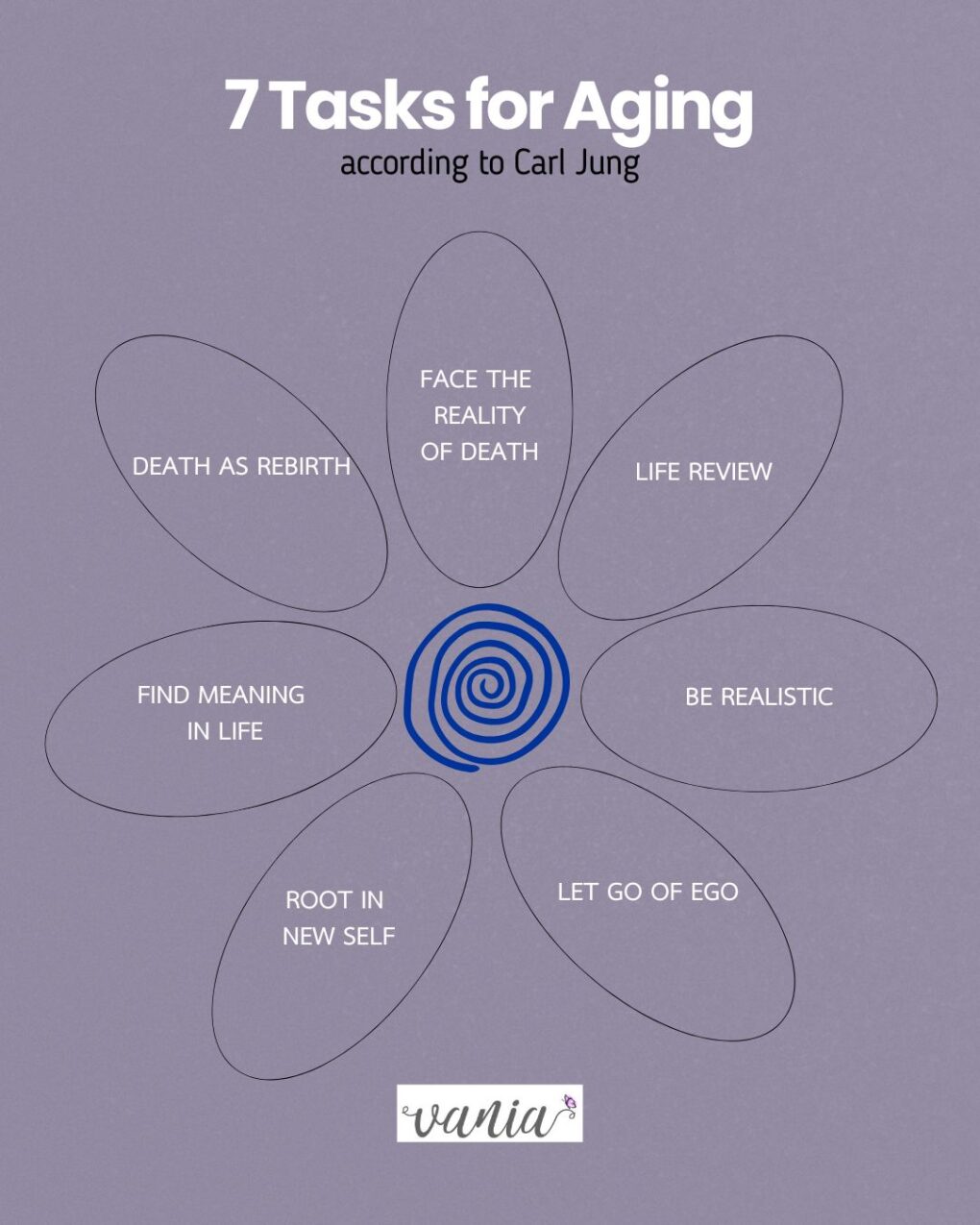
Seven Tasks of Ageing
I spent most of last year in this soul mystery school of sorts with the wise teacher Sil Read. She herself was mentored by Marion Woodman years ago. The class was broken down into three trimesters, helping us hold the tension of opposite realms of conscious feminine initiation. We wove a web via the archetypes of Mother through Virgin, all the way to Crone. I am in the era of the Virgin; a Sovereign woman who is whole and embracing myself. I am doing this with more balance and grace now as i enter my 50s consciously. Looking back at my life now, i see how i attempted to find the balance as i entered other stages of life. The messy adult initiation of 23-34, my mothering threshold at 35. And now, stepping through the portal of my Virgin era (officially 50-70) feels more fully present and possible.

In Carl Jung’s body of work, he shares tasks of aging. I love the consciousness that comes with stepping into this role with integrity and intention. I chatted with a dear friend about this and we got curious about the elders we want to be someday. I’m nowhere near ready to be a crone as I’m just now finding my footing in my virgin/queen era. To be an elder is a privilege that most older adults don’t get. To be seen as wise when i am a 75 woman is the biggest accomplishment and achievement for me. And not for the work i do and the success from that. Rather, it is from a life fully lived, and to have people sit at my fit and ask for my life story; that will be such a gift and honour. And yet being wise is embodying my knowledge in putting it into action and so this is one way that I am tested with apprenticing with becoming an elder someday. If I am so lucky to be one, I will do it with a badge of honour: That means I need to do it with joy over despair, love over being negative.

Our grief phobic and illiterate overculture is afraid to face the reality of aging and death. When we accept this inevitable ending, it offers us an opportunity. How we choose to begin to face the reality of this is the key to unlocking this door that stands at the crossroads.

We are never “old” old because in each new moment you are new. It is in this newness that i seek to explore more in my work. The nature of circling back to myself and my life already lived is a practice of remembering what younger versions of me wanted, and being able to fulfil those dreams now because I also want them still AND can birth them. And it’s having that wisdom to know how to apply all i have learned along the way. When we take time to sit with who we are becoming, and what we hope for our life – this allows space for sovereignty and agency.

The Veil of Perimenopause

October hosts a number of key dates, namely World Mental Health Day on October 10, and World Menopause Day on October 18. For me, a feminist therapist who specializes in reproductive mental health, these two days could not be more fitting together, like two puzzle pieces that go together perfectly. The season of Autumn is also known as the Perimenopause Season for all that we are starting to shed, release, and let go of. To really saturate this analogy, perimenopause is also the equivalent to the Luteal stage in the monthly menstrual cycle. So, we are in the Luteal stage of this month as the moon phase is also luteal (the New Moon of October lands on the 21).

As we get closer to November, the veil is thinning between our world and the dearly departed. I find this time of year to be so resonant for me, and i can feel in my bones how it truly is the Season of the Witch. The veil between our present and past life is also thin, as a way to remind us that our whole life is a series of deaths and rebirths.

Take our monthly menstrual cycle as an example. Each month, or about 28 days, we go through a cycle of creation, fertility and also cyclical ending. New life comes from death, we are death doulas of our own body, offering life where an ending was shed.

Marion Woodman viewed menopause as another chrysalis period of transformation. The shift in hormones offers a new type of goo in the spiritual chrysalis so that we can accept the death of our old life by stepping through the threshold of a new one. This creation is a form of Alchemy: the transformation that comes with menopause.

We are our own personal duet of being a Death doula of old life at the same time as a new life midlife rebirth midwife.

“In that experience of being formed anew, I may often feel torn asunder; old aspects of my self-conception must die in order for my new transformation into selfhood to take place,” writes feminist professor Penelope Washburn. Much like the leaves, plants, and flowers, we too go through a death of our former Self at this time of year. I’m dancing under a Veil Of Knowing this more, that our life is an endless flow of unveilings. As the mystic Hazrat Inayat Khan shared in the early 1900s, “the soul is covered by a thousand veils.”

The veils i wear are connected to feminine mystique and the delicate balance between what is seen and cannot be seen. Autumn and its mirror season, Spring are known to be in balance because the scale of day and night is more even. And yet, as October itself is such a transitional month, it’s hard not to notice how much descent we go through from September to December.

“What if midlife isn’t the beginning of the end? What if it’s a call to adventure to shed even more conditioned layers, a journey to reveal an even more authentic self, the dawn of a new life from an even deeper place of—dare I say, wisdom?” ~ Valerie Rein

Midlife Awakening of the Mature Conscious Woman
I am stepping into my Queen Era, my Virgin time, and my Magehood: NOT the acronym but the archetype of a woman in midlife who is whole onto herself. Marion Woodman coined this stage of initiating into the Conscious Woman as the “Virgin” – whole onto herself; The archetype of the Sovereign Woman, Queen, Mystic or Mage is fitting here. I also love to channel my inner Warrior or Wild Woman here as a way to get closer to the life i want for myself.

We are literally experiencing the end of something (our fertile years) and that also becomes a threshold of our becoming something new. We are meant to evolve and shift, change and grow. The fact that our monthly blood stops and we continue to be very much alive, is a testament to this new phase. Our blood remains for us, to nurture what our inner life is meant to birth, and not the caretaking we give others. This is not being taught in the bigger menopause discussions, where the focus is on the remedy for symptoms.
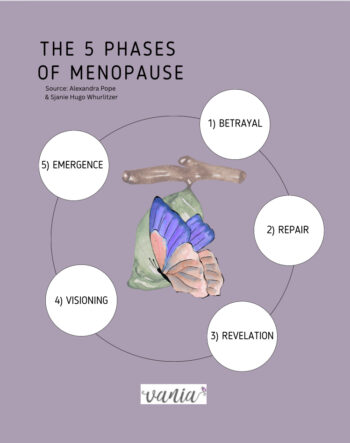
We are living longer and now have this 4th archetype. Our ageist society hates getting old, and has demonized women’s rage and anger, making menstruation a dirty word. Learning more about the possible blessing and definite spiritual transformation that is menopause has been inspiring and also a remembering for me. Learning from teachers like Jane Hardwicke Collings and the Red School’s Alexandra Pope and Sjanie Hugo Wurlitzer has provided with a stronger foundation as well as lens to see this stage of life. It is a portal to better and more, not a decline and slow death of invisibility.
For instance, i love how the reframed the 5 stages of menopause as capabilities that get born or developed at this time of life. Sure, our body does change drastically, but maybe the betrayal is not just our own body but also the story we have been taught about menopause. This propaganda and trope is to keep us distracted from the bigger truth – that our power comes with age. I share more on my instagram reel here. After we acknowledge this descent journey, we go through gates of repair, surrender and eventually emerge a a mature butterfly and Wise Woman Self. The book Wise Power unpacks this process beautifully.

We call midlife a crisis because we have been conditioned for so long to follow along, be productive and traditional. When we enter our virgin and queen era, it is a direct threat to patriarchy so we are taught it’s a crisis.

We (women and folks with wombs) are not in a crisis, they are (the patriarchy) because they are afraid of the veil being taken off. We are reclaiming our rightful place of rest and pleasure, of not dressing for the male gaze, of doing things with herbs and knowing what our bodies need. We are prioritizing our own sovereignty and not the caretaking role we have been placed in.

Blood Rites
Let’s recognize the midlife transition as an initiation. Of the power and magnitude I had not experienced before. It is the 40s decade that we come into our own, and also integrate the soul seed that has been dormant for many of us. This could not be more true for me.

“Initiation is a rite of passage, a crossing over, a movement between two worlds. For women on a journey such as this one, initiation is the Great Transition,” writes Sue Monk Kidd in her book The Dance of the Dissident Daughter. She goes on to share that “Initiation is a sacred disintegration. Despite its pain, we carry the conviction (often only faintly) that even though we don’t know where we’ll end up, we’re following a soul-path of immense richness, that we’re supposed to be on this path, that it’s required of us somehow. We move in a sense of rightness, of lure, of following a flute that pipes irresistible music.” Sue Monk Kidd

If you’re feeling stuck with your life and you need an update, start with yourself first and what is in your control for instance it might be a hobby or our class or a way that you take care of your body and health. Ask yourself what lights you up! And then move out from there maybe your job needs to change, or maybe your friendships need an update or change. When you start to notice that maybe your partner might also be inspired in that interdependence could be a catalyst for them to change and evolve as well. If they don’t, it might mean that it’s time to sit with that hard question around this relationship you have with them. Is it still serving you and aligned with your life?

Maybe it’s time to take the mask of comfort and familiarity off. In order to find what you want you have to know what you are. You need to take off the mask of fitting in, of the uninitiated.

“That ‘Mask Crack’ actually has to happen in your Midlife Passage. Carl Jung calls the first half of our life the Accommodation Phase. You accommodate others to please them, you accommodate to survive. The mask is the Persona. But by midlife – the Person, the truth of us, once buried, begins to rise, and demands its time in the light. Often after a lifetime of lies. I often say Midlife Women are like volcanoes, there comes a time when they must let the white hot lavic truth flow. Anything and everyone who holds them back from that truth, has to go.” ~ Sarah Durham Wilson.

So many of us are aching for more, a better, a more full life. Because that ache has not been fulfilled, we start to numb this pain and instead turn our focus outwards in order to not feel as hurt in our unmet needs. We start to over identify with the roles and labels of how we give to others so that we don’t feel the hurt and not also being on the receiving end.

We are not just cups or vessels, but the wellspring of flow and feminine energy. Our womb is in fact the site of all creation, a chalice that is meant to birth new life, ideas, and purpose into life.

My Body is My Home
My body is a safe home (haven) for my soul and sanctuary for my mind. My mind is my body, they are not separate. My body is a sacred vessel. When we reconnect with our bodies, especially their womb and menstrual cycle, it offers the gift of reclaiming our full life knowing more about our cycle and the various moves energies and helps us be more intentional and alive, and have a care for herself and live in this broken world.

It is time to come home to yourself. It is time to reclaim being in the body – Embodied. I am bodied.

A big reason i’m sharing my own dance with perimenopause so much is that i want body literacy and knowledge about our menstruality to be the norm for all women, and folks in general. It serves us all to carry this wisdom. This knowledge is not meant to be kept in the shadows or the fringe of our society.

For those of us born with wombs, a female reproductive system, and female physiology embodiment, it is still a challenge to trust what our body’s wisdom is. We live in a world designed for male bodies which is out of alignment with our female body’s natural rhythms, and how we as women are ultimately meant to thrive.

One of my teachers, Kimberley Ann Johnson lead us through a hands-on the pelvis class when i went to her in-person retreat. It was a reparative experience for me – to be touched by my peer and hold her bones as well. As a psychotherapist, it is not something i get to do. As a woman, it is very much what i want to do. As Kimberely shares, “when we hold each other’s bones, we call home and call forth whatever is in our pelvis, from all the thresholds we experience as women.”

Being initiated into motherhood was a catalysing moment for me. What radicalized me was learning about why my mother died (i shared more about this in my last journal article). What i now see in my full being is what is my soul’s calling – a shift in my work towards the blood rights. What is my service – body literacy, reproductive mental health in its fullness, and centreing blood rite ceremonies.

As i get closer to turning 50 in December, i can feel i’m entering late-stage perimenopause, the portal that shifts the goo of the chrysalis to the mature butterfly i’m becoming.